How to Make Hot Sauce
Ferment fresh chili peppers with salt to make a probiotic hot sauce with complex, tangy heat. Customize with garlic, fruit, and spices.
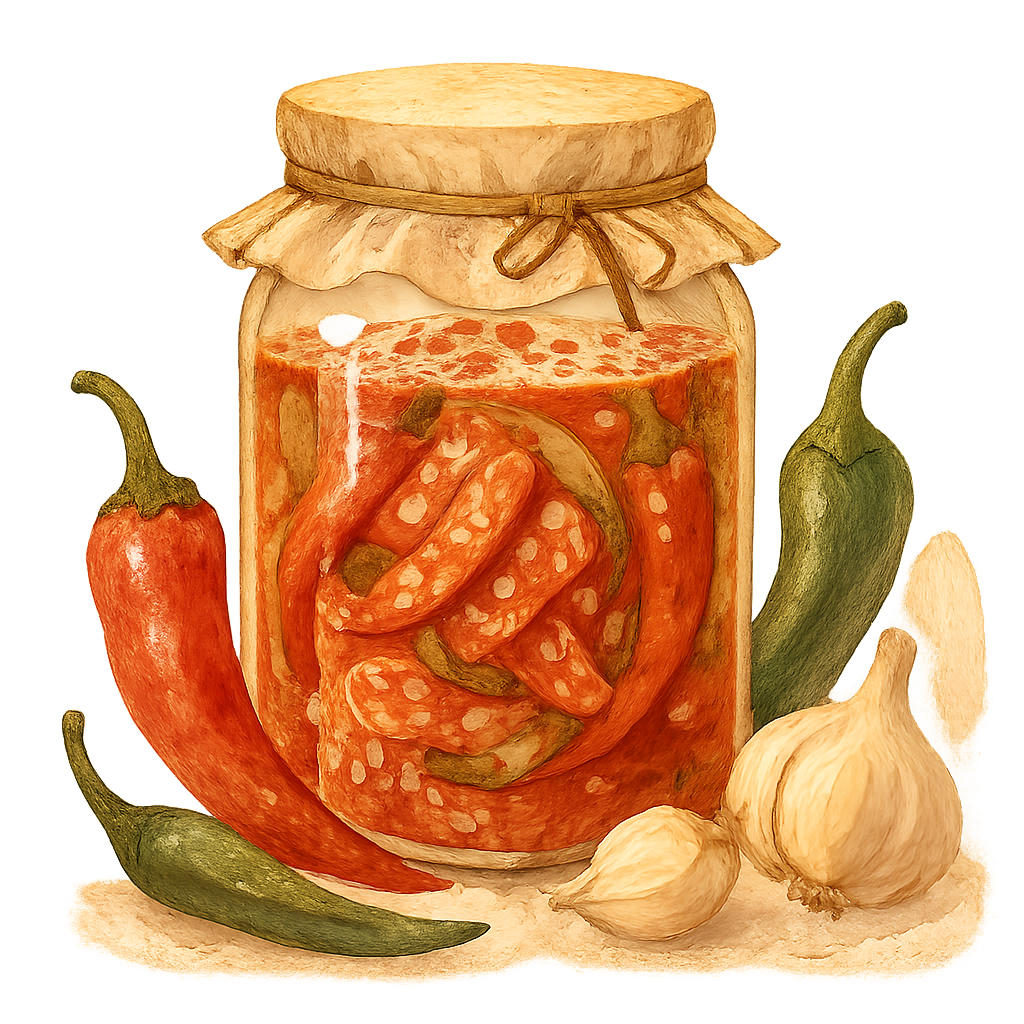
Fermented hot sauce is made by lacto-fermenting fresh chili peppers in a salt brine for 5–14 days, then blending the soured peppers into a vibrant, probiotic-rich sauce. Unlike raw hot sauces, lacto-fermentation mellows the sharp rawness of fresh peppers while building tangy, umami depth that cannot be replicated any other way. The result is a complex, shelf-stable condiment far superior in flavor to commercial hot sauce — and you control every element from heat level to texture.
Equipment
- Wide-mouth Mason jar (32oz / 1L)
- Fermentation weight (glass disc, zip-lock bag filled with brine, or small jar)
- Kitchen scale
- Cutting board and sharp chef knife
- Nitrile or latex gloves (essential for handling hot peppers)
- Blender or food processor
- Fine mesh strainer or cheesecloth (optional — for smooth sauce)
- Sterilized swing-top or screw-cap glass bottles for finished sauce
- Funnel
- pH meter or pH strips (recommended for shelf stability)
Ingredients
- Fresh hot peppers (500g / approximately 1 lb) — any variety: Fresno, jalapeño, serrano, habanero, or a mix
- Non-iodized salt (10–20g) — to create 2–3% brine by weight of total water
- Filtered or non-chlorinated water (enough to submerge peppers)
- Garlic (4–6 cloves)
- Optional aromatics: onion, carrot, dried cumin, black pepper, lime zest
- Optional sweetener: honey or sugar (added after fermentation, before blending)
- Apple cider vinegar (2–4 tablespoons, optional — added at blending stage for longer shelf life and sharper tang)
Workflow
Prepare Peppers & Brine
30–45 minutesPut on gloves
Always wear nitrile or latex gloves before handling hot peppers. Capsaicin binds to skin and mucous membranes and is extremely difficult to remove with soap and water alone.
Never touch your eyes, nose, or mouth while handling hot peppers — even with gloves on
Capsaicin on skin causes burning that can persist for several hours
Wash and inspect peppers
Rinse peppers under cold water. Discard any with soft spots, mold, or visible damage — fermentation amplifies problems rather than fixing them. Only use firm, fresh peppers in good condition.
Trim stems and roughly chop
Remove stems (the green calyx). Halve or roughly chop peppers so they pack into the jar efficiently and allow brine to penetrate all surfaces. Leave seeds in for more heat, remove for a milder sauce.
Prepare aromatics
Peel and lightly smash garlic cloves. Roughly chop any additional aromatics such as onion or carrot. These contribute flavor complexity and help feed beneficial bacteria during fermentation.
Mix the brine
Dissolve salt in filtered water to create a 2–3% brine: 20g salt per 1 liter water for 2% (baseline), or 30g per liter for 3% (better for warm environments or long ferments). Stir until fully dissolved.
Never reduce salt below 2% — it provides the crucial protection against harmful bacteria in the early stages
Pack peppers and pour brine
Layer peppers and aromatics into the jar, packing them firmly. Leave at least 2 inches of headspace above the peppers for brine and CO2 expansion. Pour brine over the peppers until everything is submerged with at least half an inch of brine above the top pepper. Place your fermentation weight on top.
Any pepper exposed to air above the brine is at risk of mold
Fill the jar to no more than 80% full — CO2 gas will expand the contents during active fermentation
Cover the jar
Cover loosely with a lid (half-turn loose), cloth, or paper towel secured with a rubber band. The jar must allow CO2 to escape during active fermentation. An airlock lid eliminates the need to burp the jar daily.
Ready When
Lacto-Fermentation
5–14 daysPlace in the right environment
Set the jar on a small plate or tray (overflow is common in the first few days) in a spot away from direct sunlight. Ideal temperature is 65–75°F (18–24°C). Cooler temperatures produce slower fermentation with more complex flavor; warmer temperatures produce faster results with slightly sharper sourness.
Watch for signs of active fermentation (Days 1–3)
Activity typically begins within 24–48 hours: tiny bubbles appear on the peppers and brine begins to turn slightly cloudy. This cloudiness is Lactobacillus bacteria — completely normal and desirable. If using a regular lid, burp the jar daily by briefly loosening to release CO2.
Check daily and keep peppers submerged
Each day, check that all peppers remain below the brine line. Press any that have floated back down. Look for any mold on exposed surfaces. Skim off white flat film (kahm yeast) if it appears — it is harmless but should be removed to prevent flavor impact.
Flat, white kahm yeast film on the surface is harmless — skim it off and ensure peppers are submerged
Fuzzy, raised mold (green, black, pink, orange) requires evaluating whether the batch can be saved or must be discarded
Begin tasting at day 5
Use a clean utensil to lift a piece of pepper and taste. Early ferment is salty and mildly sour; by day 7–10 it should taste pleasantly tangy with developed complexity. The brine is equally valuable to taste — it should be tart and savory. Ferment to your preferred sourness level.
Ready When
Blend & Bottle
20–30 minutesDrain and reserve the brine
Pour the fermented peppers and garlic into a colander set over a bowl. Reserve all of the brine — it is packed with probiotics and will be used to adjust sauce consistency.
Blend peppers
Transfer peppers and aromatics to a blender. Add about half a cup of reserved brine. Blend on high for 60–90 seconds until very smooth. Start with less brine to maintain control over final consistency.
Hold the blender lid down firmly with a folded towel over the top — CO2 and steam can build pressure
If using very hot peppers (habanero, ghost pepper), ventilate the room and avoid breathing the steam directly
Strain if desired
For a smooth, restaurant-style sauce, press the blended mixture through a fine mesh strainer or cheesecloth. For a chunkier sauce with more body and fiber, skip straining. Both approaches produce delicious results.
Taste and adjust
Taste the sauce and adjust to preference: add more reserved brine for thinner consistency, a pinch of salt for salinity, a teaspoon of honey or sugar for sweetness, or 2–4 tablespoons of apple cider vinegar for sharper acidity and longer shelf life.
Bottle the sauce
Pour through a funnel into sterilized glass bottles. Leave half an inch of headspace. Seal with a clean cap. Label with the date, pepper variety, and heat level.
Ready When
Aging & Storage
Refrigerate or age at room temperature
For immediate use, refrigerate the bottled sauce. For a more mellow, complex flavor profile, leave sealed bottles at room temperature for 1–3 additional weeks before refrigerating. Taste weekly and refrigerate when the flavor suits you.
Shake before each use
Natural separation is entirely normal in a preservative-free fermented sauce. The solids settle away from the water-based liquid. Give the bottle a good shake before pouring.
Troubleshooting
Common issues and how to fix them. Something look off? Find your symptom below.
Food Safety
Hygiene
Wear nitrile or latex gloves when handling hot peppers. Capsaicin causes severe skin and eye burning that can persist for hours. Never touch your face during preparation.
Keep all peppers fully submerged below the brine at all times. Use a fermentation weight — any pepper exposed above the brine line is at risk of mold.
Use 2–3% salt brine by weight. Never reduce below 2% — salt is the primary protection against harmful bacteria in the critical early hours before pH drops.
Equipment
Blend hot peppers in a well-ventilated area or near an open window. Blending aerosolizes capsaicin, which causes coughing, eye burning, and respiratory irritation.
Do not blend hot sauce in a sealed container — pressure from steam and CO2 can cause the lid to blow off violently. Always vent the blender lid and blend in batches.
Storage
Test finished sauce pH with a calibrated digital pH meter before storing at room temperature. pH must be 4.6 or below for shelf stability. If above 4.6, refrigerate and use within 4 weeks.
Store bottled sauce in glass bottles. Avoid metal lids in direct contact with the sauce — the acid will corrode metal over time.
Temperature
Ferment at 65–75°F (18–24°C). Above 80°F, fermentation can produce off-flavors and the risk of undesirable microorganisms competing with Lactobacillus increases.
When to Discard
Fuzzy mold of any color on peppers or brine surface
Any fuzzy, raised mold — green, black, pink, orange, or white — means contamination. Do not attempt to scrape mold off and continue. Discard the entire batch, sanitize the jar, and start fresh.
Putrid or rotten smell (not just sour or tangy)
Fermenting peppers should smell sour, tangy, and peppery. A putrid, sulphurous-rotten, or truly foul smell that persists beyond the first 24–48 hours indicates spoilage. Discard immediately and do not taste.
pH above 4.6 after fermentation
If pH remains above 4.6 after 7+ days of fermentation, the sauce is not safe for room-temperature storage. Refrigerate and use within 4 weeks, or add enough apple cider vinegar to bring the pH below 4.6.
Storage Guidelines
Room Temperature
If pH is verified at or below 4.6 and sauce was made with adequate salt and apple cider vinegar: shelf-stable for 6+ months in a sealed glass bottle.
Refrigerated
Refrigerate after opening. Unverified-pH sauces: use within 4 weeks refrigerated. Verified-pH sauces: 4–6 months after opening.
Shelf Life
pH-verified shelf-stable sauce: 6–12 months at room temperature. Refrigerated (all sauces): 4–6 months after opening.
Flavor Variations
Once you have mastered the basics, try these flavor combinations to take your ferments to the next level.
Louisiana-Style Cayenne
Whole cayenne peppers lacto-fermented for 7–10 days then blended with white wine vinegar and salt — a tangy, pourable hot sauce in the Tabasco tradition.
Ingredients
- 500g fresh cayenne peppers, stems removed
- 2.5% brine (25g salt per liter of water)
- Half cup white wine vinegar (added after fermentation, at blending)
- Salt to taste
Ferment whole peppers submerged in brine for 7–14 days until thoroughly soured.
The vinegar is added at blending — not during fermentation — for the characteristic sharp tang.
Caribbean Scotch Bonnet with Mango
Fermented Scotch bonnet peppers with mango, carrot, and allspice for a fruity, intensely hot Caribbean sauce with aromatic tropical depth.
Ingredients
- 200g Scotch bonnet peppers (or habaneros), stems removed
- 1 mango, peeled and roughly chopped
- 1 carrot, roughly chopped
- 3 cloves garlic
- 1 teaspoon allspice berries
- 2.5% brine for fermentation
- 1 tablespoon apple cider vinegar at blending
Scotch bonnets are extremely hot — wear gloves throughout and do not touch your eyes.
Mango and carrot mellow the heat slightly and provide natural thickness to the finished sauce.
Mango Habanero
A tropical, fruit-forward fermented hot sauce — sweet mango counters habanero heat for a sauce that is both fiery and complex with layered flavor.
Ingredients
- 150g habanero peppers, stems removed
- 1 large ripe mango, roughly chopped
- Half onion, roughly chopped
- 2 cloves garlic
- Juice of 1 lime (added at blending)
- 2.5% brine for fermentation
- Salt to taste
Ferment peppers, mango, onion, and garlic together in the brine for 5–7 days.
Add lime juice after fermentation — it balances sweetness and adds brightness.
Jalapeño Verde
A fresh, bright green hot sauce made from fermented jalapeños with tomatillos, cilantro, and lime — the fermented cousin of salsa verde with far more depth.
Ingredients
- 300g fresh jalapeños, roughly chopped
- 200g tomatillos, husked and quartered
- 4 cloves garlic
- Half white onion, roughly chopped
- 2.5% brine for fermentation
- Large bunch fresh cilantro (added at blending, not fermented)
- Juice of 2 limes (added at blending)
Ferment jalapeños, tomatillos, garlic, and onion together in brine for 5–7 days.
Add fresh cilantro and lime juice only at blending — fermentation would destroy their fresh character.
Track Your Hot Sauce with FermentBuddy
Get smart timers, guided workflows, and real-time troubleshooting for your hot sauce and all your fermentation projects.