How to Make Sauerkraut
Ferment crisp, tangy sauerkraut using just cabbage and salt. A classic probiotic side dish rich in vitamins and gut-friendly bacteria.
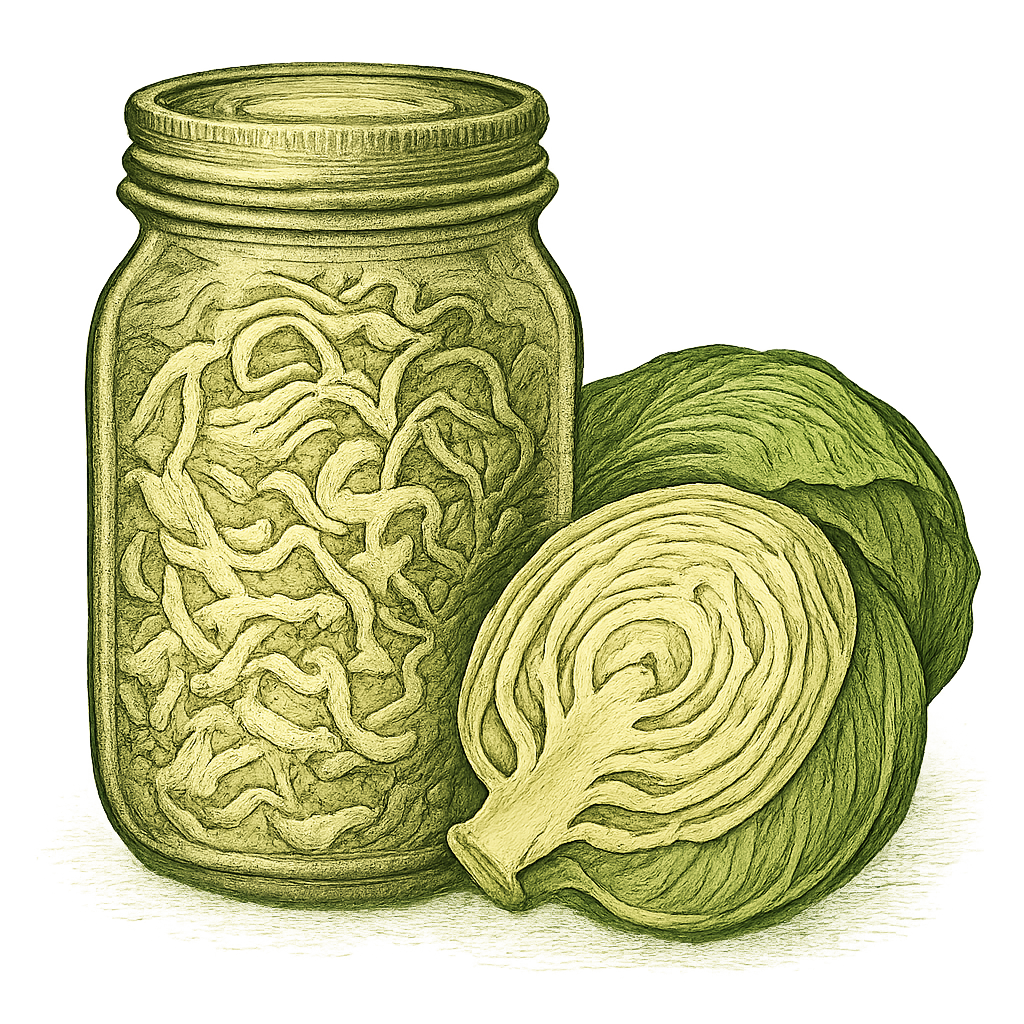
Sauerkraut is fermented cabbage transformed by naturally occurring lactic acid bacteria — one of the simplest, safest, and most rewarding home ferments. With just two ingredients (cabbage and salt), the process takes 1–4 weeks and produces a crunchy, tangy, probiotic-rich condiment that keeps for months in the refrigerator. The science is reliable: proper salt concentration creates an anaerobic brine where beneficial Lactobacillus bacteria thrive and harmful organisms cannot survive.
Equipment
- Wide-mouth mason jar (quart or half-gallon)
- Fermentation weight or zip-lock bag filled with brine
- Large mixing bowl
- Sharp knife and cutting board
- Kitchen scale (highly recommended)
- Wooden spoon or tamper for packing
- Breathable cover (cloth or loose lid)
Ingredients
- Fresh green or red cabbage (about 2 lbs / 900g)
- Non-iodized sea salt or kosher salt (2% of cabbage weight — 20g per 1kg)
Workflow
Prepare Cabbage
30 minutesRemove outer leaves
Peel off and set aside 1–2 large, clean outer leaves. Discard any damaged or dirty outer leaves.
Quarter and core
Cut cabbage into quarters and remove the hard core from each piece.
Slice thinly
Slice or shred cabbage into thin ribbons, about 1/8 inch thick.
Weigh and calculate salt
Weigh your sliced cabbage and calculate 2% salt by weight (e.g., 20g salt for 1000g cabbage).
Add salt
Sprinkle salt evenly over the cabbage in a large bowl and toss to distribute.
Massage & Pack
15–20 minutesMassage the cabbage
Squeeze and massage the salted cabbage with clean hands for 5–10 minutes until it becomes limp and releases significant liquid.
Pack tightly into jar
Transfer cabbage to the jar in handfuls, pressing down firmly after each addition to eliminate air pockets. The brine should rise above the cabbage as you pack.
Top with reserved leaf and add weight
Place a folded outer cabbage leaf over the surface, then press your fermentation weight on top to keep everything submerged below the brine.
Cover loosely
Cover the jar with a cloth or rest the lid on top without sealing airtight. Gas must be able to escape during fermentation.
If not enough brine has formed after packing, make additional 2% brine (1 tsp non-iodized salt per cup water) and add just enough to cover the cabbage.
Fermentation
1–4 weeksPlace in a cool spot
Set the jar in a cool area (60–75°F / 15–24°C) away from direct sunlight. A countertop or pantry shelf works well.
Check and press daily
Once a day, check that the cabbage is still submerged. Press down the weight or use a clean spoon to push any floating pieces back under the brine. Skim any white surface film (kahm yeast) if it appears.
Taste starting at day 5
Use a clean fork to pull a small sample and taste. Continue fermenting until you reach your preferred level of sourness. Most people prefer kraut at 1–3 weeks.
Ready When
Storage
Transfer and refrigerate
When you are happy with the flavor, transfer to clean jars with tight-fitting lids and refrigerate. Fermentation slows dramatically in the cold.
Serve with clean utensils
Always use a clean fork to remove sauerkraut. Avoid introducing oils or other food particles into the jar.
Troubleshooting
Common issues and how to fix them. Something look off? Find your symptom below.
Food Safety
Hygiene
Keep all cabbage fully submerged below the brine at all times. Exposed cabbage above the brine line can develop mold. Check and press down daily during the first week.
Use exactly 2% salt by weight of the cabbage. Too little salt allows harmful bacteria to dominate early fermentation; too much inhibits beneficial bacteria.
Always use non-iodized salt (sea salt or kosher salt). Iodine in table salt inhibits the lactic acid bacteria responsible for safe fermentation.
If brine level drops below the cabbage surface, top up with 2% salt brine only (1 tsp non-iodized salt per 1 cup water). Never use plain water — it dilutes the protective salt concentration.
Sauerkraut is very high in sodium. People on sodium-restricted diets should consume in small portions. Rinsing briefly before eating reduces sodium somewhat.
Temperature
Ferment at 65–75°F (18–24°C). Above 80°F fermentation is too rapid, producing a mushy, overly sour product. Below 60°F fermentation slows dramatically.
Storage
Sauerkraut is very high in Vitamin K2. Individuals taking blood thinners (warfarin/Coumadin) should maintain consistent intake and consult their doctor.
When to Discard
Fuzzy mold growth (any color)
Fuzzy mold (green, blue, black, or pink) on the surface or in the brine requires removing the affected portion plus a generous margin. Kahm yeast — which is thin, flat, and white — is not mold and is harmless. If mold is extensive or penetrates the brine, discard the whole batch.
Putrid, rotten, or vomit-like smell
Healthy sauerkraut smells sour, tangy, and bright — like sour pickles. A rotten egg smell beyond the initial sulfur of days 1–3, or a truly putrid odor, indicates harmful bacterial growth. Discard immediately.
Slimy or viscous brine
Brine that is stringy or thick like mucus (rather than just cloudy or slightly thick) indicates bacterial spoilage. Discard the batch and start fresh with correct salt ratio.
Storage Guidelines
Room Temperature
Active fermentation: 1–4 weeks at 65–75°F. Check daily and press down cabbage to keep submerged.
Refrigerated
After reaching desired sourness, refrigerate in a sealed jar with cabbage submerged in brine. Fermentation continues very slowly but the kraut is essentially preserved.
Frozen
Can be frozen, though texture softens significantly. Frozen sauerkraut is best used in cooked dishes such as soups, stuffed cabbage, or braised pork.
Shelf Life
Refrigerated sauerkraut: 6–12 months or longer. Probiotic content slowly declines but flavor remains excellent for many months.
Flavor Variations
Once you have mastered the basics, try these flavor combinations to take your ferments to the next level.
Classic Caraway
The definitive German sauerkraut — earthy, slightly anise-scented caraway seeds complement the tangy cabbage with an authentic old-world flavor.
Ingredients
- 1 medium head green cabbage
- 2% sea salt by weight
- 1 tbsp caraway seeds
- 1 tsp juniper berries, lightly crushed
Lightly toast caraway seeds in a dry pan before adding for a deeper, nuttier flavor.
Juniper berries add a subtle piney note and are traditional in German and Alsatian recipes.
Ginger Garlic
A fusion-style kraut bridging German lacto-fermentation with Asian aromatics — warming ginger and mellow fermented garlic create an addictive everyday condiment.
Ingredients
- 1 medium head green cabbage
- 2% sea salt by weight
- 2 tbsp fresh ginger, grated
- 4 cloves garlic, thinly sliced
- 1 tsp rice vinegar (added at day 1 for brightness)
Garlic turns blue-green during fermentation due to a reaction with sulfur compounds — completely safe and normal.
Ginger accelerates fermentation; taste daily from day 3.
Carrot Ginger
Finely shredded carrot adds natural sweetness and bright orange color; fresh ginger provides warmth in this popular, forgiving everyday kraut.
Ingredients
- ¾ head green cabbage
- 3 medium carrots, finely shredded
- 2% sea salt by total weight
- 2 tbsp fresh ginger, grated
- 1 tsp turmeric (optional)
An excellent beginner variation — forgiving, fast-fermenting, and universally liked.
Carrot's high natural sugar content ensures an active ferment with good brine production.
Beet & Caraway
Raw shredded beet adds vivid crimson color, natural sweetness, and earthy undertones to a classic caraway sauerkraut — stunning to look at and delicious.
Ingredients
- ¾ head green cabbage
- 2 medium beets, peeled and finely shredded
- 2% sea salt by total weight
- 1 tbsp caraway seeds
- 1 tsp apple cider vinegar (optional, for brightness)
The beet will turn the entire kraut a deep magenta — expected and beautiful.
Beet adds natural sugar which can speed up fermentation; taste from day 3.
Apple & Fennel
Crisp Granny Smith apple and fennel balance sweet and savory for a lighter, more delicate sauerkraut that pairs wonderfully with pork, cheese boards, and charcuterie.
Ingredients
- ¾ head green cabbage
- 1 tart apple (Granny Smith), cored and finely shredded
- 1 small fennel bulb, thinly sliced
- 2% sea salt by total weight
- 1 tsp fennel seeds
Apple adds natural sugar which accelerates fermentation and produces a slightly fruitier tang.
Shred apple just before mixing with cabbage to prevent oxidation browning.
Chili, Ginger & Turmeric
A boldly spiced golden kraut with anti-inflammatory turmeric, warming ginger, and gentle chili heat — stunning in color and deeply flavored.
Ingredients
- 1 medium head green cabbage
- 2% sea salt by weight
- 1 tbsp fresh turmeric, grated (or 1 tsp dried)
- 1 tbsp fresh ginger, grated
- 1–2 dried red chilies or ½ tsp chili flakes
Wear gloves when handling fresh turmeric — it stains surfaces and skin intensely.
The golden color deepens beautifully as fermentation progresses.
Track Your Sauerkraut with FermentBuddy
Get smart timers, guided workflows, and real-time troubleshooting for your sauerkraut and all your fermentation projects.