How to Make Milk Kefir
Culture creamy, probiotic-rich milk kefir using live kefir grains. A tangy drinkable yogurt packed with beneficial bacteria and yeast.
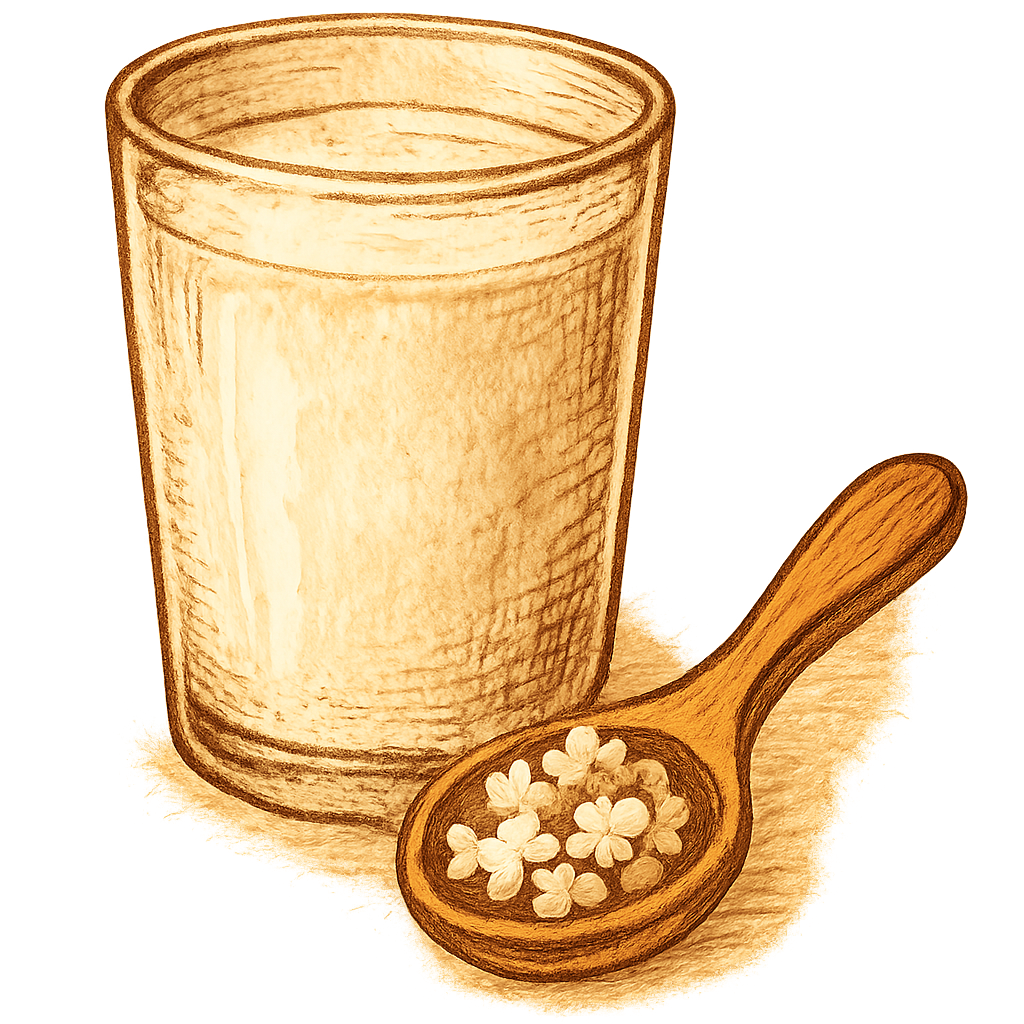
Milk kefir is a creamy, tangy, probiotic-rich fermented dairy drink made by culturing milk with kefir grains — a living colony of bacteria and yeasts that look like small cauliflower florets. Unlike yogurt, kefir requires no heating and ferments in just 24–48 hours at room temperature. The grains are reused indefinitely, growing larger over time so you can share extras. Kefir is nutritionally dense, contains a wider variety of beneficial organisms than yogurt, and digests lactose so effectively that many lactose-intolerant people tolerate it well.
Equipment
- Glass jar (1 quart / 1L)
- Plastic or nylon mesh strainer (never metal)
- Wooden or plastic spoon
- Breathable cover (cloth, coffee filter, or paper towel)
- Rubber band
- Second jar or bottle for storing finished kefir
Ingredients
- Active milk kefir grains (1–2 tablespoons)
- Whole milk, pasteurized (3–4 cups / 750ml–1L)
Workflow
Combine Grains & Milk
5 minutesAdd kefir grains to jar
Place 1–2 tablespoons of active milk kefir grains into a clean glass jar.
Pour in milk
Add 3–4 cups of whole milk at room temperature. A rough ratio is 1 tablespoon of grains per 2 cups of milk.
Do not use ultra-pasteurized (UHT) milk for regular batches — it weakens grains over time.
Cover and place
Cover the jar with a breathable cloth or coffee filter secured with a rubber band. Place at room temperature (68–75°F / 20–24°C) away from direct sunlight.
Ready When
Fermentation
24–48 hoursLet it ferment
Leave the jar undisturbed at room temperature for 24–48 hours. Gently swirl once or twice during fermentation if you like, but do not shake vigorously.
Check for readiness
After 24 hours, check the kefir. It should have thickened slightly with a tangy, yeasty aroma. If the milk has fully separated into thick curds and clear watery whey, it has over-fermented — still safe, just more sour and very thick.
Ready When
Strain & Enjoy
5 minutesStrain out the grains
Pour the contents of the jar through a plastic or nylon strainer into a clean jar or bottle. Gently stir with a wooden or plastic spoon to help the kefir pass through.
Collect and reuse grains
The grains remaining in the strainer are ready for the next batch immediately. They may have grown — kefir grains multiply steadily over time.
Drink or second-ferment
Drink the strained kefir immediately, refrigerate for up to 2–3 weeks, or do a second fermentation: seal the strained kefir in a bottle at room temperature for 12–24 hours to build light carbonation and additional flavor depth.
Ongoing: Grain Care
Start the next batch immediately
Place strained grains directly into fresh milk to start the next batch. No need to rinse the grains — just add milk and repeat.
Taking a break
Place grains in fresh milk and refrigerate. Change the milk once a week. Grains can rest in the refrigerator for up to 3 weeks.
Troubleshooting
Common issues and how to fix them. Something look off? Find your symptom below.
Food Safety
Hygiene
Monitor grain health at each batch. Healthy grains are white or cream-colored, rubbery, and cauliflower-shaped. Pink, orange, or gray discoloration indicates contamination — discard affected grains.
Discard any batch with fuzzy mold growth on the surface or on the grains. Rinse grains with non-chlorinated water. If grains remain discolored or slimy after rinsing, discard them.
Rinse equipment with plain water, not tap water with strong chlorine. Chlorine kills the beneficial microorganisms in kefir grains. Never use soap directly on the grains.
Milk kefir is not safe for those with serious dairy or milk protein allergies. Lactose-intolerant individuals may tolerate kefir well, but should introduce it gradually.
Temperature
Do not ferment milk kefir at room temperature for more than 48 hours. Over-acidification weakens grains and creates an excessively sour product.
Equipment
Use only plastic or nylon strainers and spoons when handling grains. Prolonged metal contact can harm the microbial community in the grains over time.
Storage
Kefir contains small amounts of alcohol (0.2–2% ABV) produced by yeast fermentation. Inform those who avoid alcohol before serving.
When to Discard
Fuzzy mold on the jar surface or grains
Any fuzzy mold growth on the kefir surface or on the grains requires discarding the batch and rinsing the grains with non-chlorinated water. If grains remain contaminated or discolored after rinsing, discard them and obtain fresh grains.
Pink or orange grain or kefir discoloration
Pink or orange color in the kefir or on the grains themselves indicates contamination by unwanted organisms. Discard the batch and the grains — do not attempt to clean and reuse discolored grains.
Rotten, putrid, or strongly unpleasant smell (beyond normal sour dairy)
Kefir should smell tangy, slightly yeasty, and reminiscent of mild sour cream. A truly rotten, vomit-like, or putrid smell (not just very sour) indicates spoilage or dead grains. Discard the batch.
Storage Guidelines
Room Temperature
Ferment at room temperature (68–75°F) for 24–48 hours. Taste at 24 hours. Remove grains before storing finished kefir.
Refrigerated
Finished kefir (grains removed) keeps for 2–3 weeks refrigerated. Flavor continues to develop and deepen. Grains can rest in milk in the fridge for up to 3 weeks.
Frozen
Finished kefir can be frozen but texture changes significantly. Better to freeze the grains: dry on parchment paper and freeze for long-term backup storage.
Shelf Life
Refrigerated finished kefir: 2–3 weeks. Kefir grains are indefinitely reusable when maintained properly.
Flavor Variations
Once you have mastered the basics, try these flavor combinations to take your ferments to the next level.
Wild Berry Smoothie
Blended frozen mixed berries with kefir create a thick, probiotic-rich smoothie that rivals any store-bought version — and is significantly more nutritious.
Ingredients
- 1 cup finished kefir
- ½ cup frozen mixed berries
- 1 tbsp honey or maple syrup
- 1 tsp vanilla extract
Frozen berries thicken the kefir naturally without added starch.
For a parfait, layer with granola and top with fresh fruit.
Mango Coconut Lassi
Inspired by the Indian mango lassi, this tropical blend is sweet, creamy, and cooling — an excellent summer drink made far healthier with kefir.
Ingredients
- 1 cup finished kefir
- ½ cup fresh or frozen mango chunks
- 2 tbsp coconut cream or full-fat coconut milk
- Pinch of cardamom
- 1 tsp honey
Full-fat coconut milk adds richness that balances kefir's tang beautifully.
A pinch of cardamom is traditional and elevates the flavor noticeably.
Golden Milk Kefir
Inspired by Ayurvedic golden milk — warming turmeric and black pepper with honey create a health-forward flavored kefir that is both soothing and nutritious.
Ingredients
- 1 cup finished kefir
- ¼ tsp ground turmeric
- ⅛ tsp ground ginger
- Pinch of black pepper
- 1 tsp raw honey
- ⅛ tsp cinnamon
Black pepper is essential — it dramatically increases curcumin absorption from turmeric.
Whisk vigorously or blend to fully incorporate turmeric without clumps.
Cinnamon Vanilla
Warming cinnamon and pure vanilla transform plain kefir into a dessert-worthy drink reminiscent of a healthy creamy milkshake — no blender required.
Ingredients
- 1 cup finished kefir
- ½ tsp cinnamon
- 1 tsp pure vanilla extract
- 1–2 tsp maple syrup or honey
Ceylon cinnamon has a more delicate, complex flavor than cassia — worth using here.
This makes an excellent base for a granola parfait.
Herb Ranch Dip
Strained and thickened kefir makes a tangy, probiotic-rich ranch-style dip or dressing — far more nutritious than commercial versions.
Ingredients
- 1 cup finished kefir, strained through cheesecloth for 2 hours to thicken
- 1 tbsp fresh dill, chopped
- 1 tbsp fresh chives, snipped
- 1 clove garlic, minced or pressed
- ½ tsp onion powder
- Salt and pepper to taste
Strain kefir in the refrigerator overnight for a very thick, sour cream-like consistency.
Doubles as a topping for baked potatoes, tacos, or grain bowls.
Cardamom Rose
A fragrant, Middle Eastern-inspired kefir with cardamom and culinary rose water — exotic, floral, and gently sweet. A small glass makes a special treat.
Ingredients
- 1 cup finished kefir
- ¼ tsp ground cardamom
- ½ tsp food-grade rose water (use sparingly)
- 1 tsp honey or agave
- Optional: pinch of saffron bloomed in 1 tsp warm water
Rose water is very potent — start with ¼ tsp and adjust to taste.
A single pinch of saffron adds a gorgeous golden color and subtle flavor.
Track Your Milk Kefir with FermentBuddy
Get smart timers, guided workflows, and real-time troubleshooting for your milk kefir and all your fermentation projects.