How to Make Kimchi
Make traditional Korean kimchi with napa cabbage, gochugaru, garlic, and ginger. A spicy, umami-packed fermented side dish.
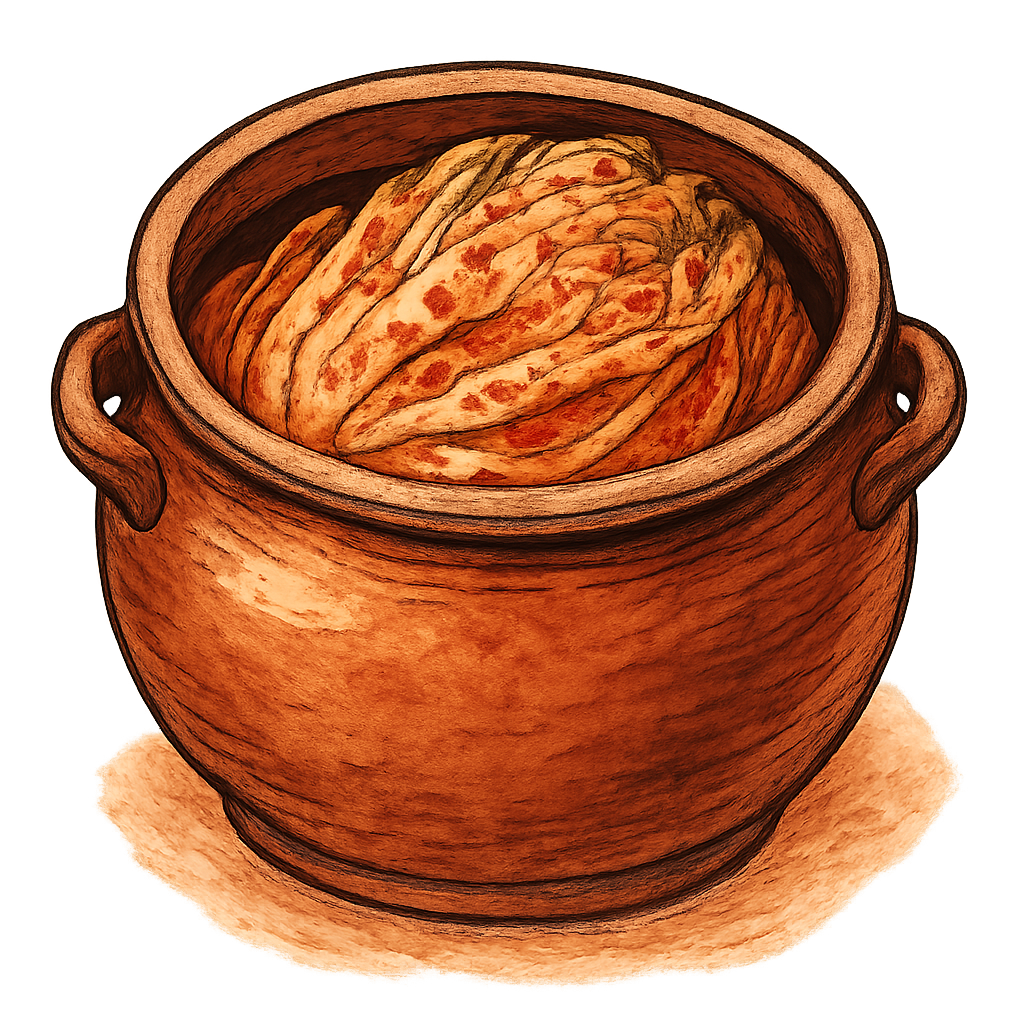
Kimchi is Korea's iconic fermented vegetable dish — most famously made with napa cabbage, gochugaru chili flakes, garlic, ginger, and fish sauce. Lactic acid bacteria transform the ingredients over just 1–5 days at room temperature into a complex, spicy, effervescent ferment that then continues to develop for months in the refrigerator. Beyond flavor, kimchi is nutritionally exceptional: it is rich in probiotics, vitamins C and K, and antioxidants from the chili. Once you master the classic baechu-kimchi, a world of regional variations awaits.
Equipment
- Large mixing bowl (non-reactive — glass or stainless steel)
- Colander
- Cutting board and sharp knife
- Kitchen gloves (disposable — gochugaru stains and irritates skin)
- Wide-mouth glass jar (1-quart or half-gallon)
- Kitchen scale (recommended)
- Small plate or fermentation weight
Ingredients
- Napa cabbage (1 medium head, ~2 lbs / 900g)
- Coarse sea salt or kosher salt (¼ cup / 60–70g, non-iodized)
- Gochugaru — Korean red pepper flakes (¼ cup / 30g)
- Fish sauce (2 tablespoons) or soy sauce + miso for vegan
- Garlic (5–6 cloves, minced)
- Fresh ginger (1-inch piece, grated)
- Sugar (1 teaspoon)
- Korean radish or daikon (4 oz / 120g, julienned)
- Scallions / green onions (3–4 stalks, cut into 1.5-inch pieces)
- Rice flour paste (2 tbsp rice flour + 1 cup water, cooked) — optional binder
Workflow
Salt & Brine the Cabbage
6–12 hours (or overnight)Quarter the cabbage
Remove wilted outer leaves. Cut the cabbage in half lengthwise, then into quarters. Keep the core intact — it holds the leaves together during salting.
Salt between leaves
Gently separate each leaf and sprinkle coarse salt between them. Concentrate the salt on the thick white rib areas — they need more than the thin green tips. Use roughly 1 tablespoon of salt per quarter.
Rest and flip
Place salted quarters cut-side up in a large bowl. Rest for 2 hours, then flip. Repeat every 2 hours for 6–8 hours total, or salt overnight.
Test for doneness
Bend a thick white rib piece. If it bends in a U-shape without snapping or cracking, the salting is complete.
Rinse and drain
Rinse each quarter 3 times under cold water, separating leaves to remove excess salt. Drain in a colander for 15–30 minutes, gently squeezing out excess water.
Do not skip rinsing — excess salt prevents proper fermentation and creates an unpleasantly salty product.
Ready When
Prepare Seasoning Paste
20–30 minutesMake rice flour paste (optional but recommended)
Mix 2 tbsp rice flour with 1 cup cold water in a small saucepan. Heat over medium, stirring constantly until it thickens to a porridge consistency (3–5 minutes). Let cool completely.
Combine all paste ingredients
Mix gochugaru, fish sauce, garlic, ginger, and sugar into the cooled rice paste. Stir into a thick, uniform, spreadable paste.
Let rice paste cool completely before mixing — hot paste can kill beneficial bacteria.
Mix in vegetables
Add julienned radish and scallions to the paste. Mix until everything is evenly coated with the red paste.
Ready When
Assemble & Pack
20–40 minutesApply paste to leaves
Working with one cabbage quarter at a time, spread paste thoroughly between each leaf. Concentrate more paste on the thick white bases. Use all the paste.
Cut into pieces (optional)
Leave as traditional whole quarters or cut each seasoned quarter into 2-inch pieces for easier serving and slightly faster fermentation.
Pack tightly into jar
Press kimchi firmly into the jar, pressing down to eliminate air pockets. The brine should rise to cover the surface. Leave at least 1 inch of headspace.
Do not fill more than 80% of the jar — kimchi expands as it ferments and releases gas.
Do not seal completely airtight unless using a proper airlock lid.
Ready When
Room-Temperature Fermentation
1–5 daysPlace in a warm spot
Set the jar on a plate (to catch any overflow) at room temperature (65–75°F / 18–24°C), away from direct sunlight.
Burp the jar daily
Open the lid briefly once or twice daily to release CO2 gas. Press the kimchi back below the brine with clean hands or a spoon.
White film (kahm yeast) on the surface is harmless — skim it off.
Fuzzy colored mold (green, black, pink) means the batch should be discarded.
Taste starting at 24 hours
Use a clean utensil to taste daily. Fresh kimchi tastes garlicky and salty. It becomes tangier and more effervescent each day. Most people prefer kimchi after 2–3 days at room temperature.
Ready When
Refrigerate & Age
Transfer to refrigerator
Once desired sourness is reached, seal firmly and refrigerate. Cold dramatically slows fermentation and allows flavors to develop more gently over weeks and months.
Always use clean utensils
Use a clean fork or chopstick every time you remove kimchi. Keep remaining kimchi pressed below the brine.
Troubleshooting
Common issues and how to fix them. Something look off? Find your symptom below.
Food Safety
Hygiene
Keep all vegetables submerged below the brine throughout fermentation. Pack tightly, press down after packing, and use a weight if needed. Exposed vegetables can develop mold.
Traditional kimchi contains fish sauce or fermented shrimp (shellfish). Always inform guests about these allergens. Make vegan kimchi by substituting fish sauce with soy sauce or miso paste.
Wear gloves when handling gochugaru paste and during mixing. Capsaicin causes skin and eye irritation. Avoid touching your face during preparation.
Kimchi is high in sodium — a standard ½ cup serving contains 300–500mg. Monitor intake if managing blood pressure or kidney health.
Always use clean utensils when removing kimchi from the jar. Never double-dip or use utensils that have touched other foods. Keep remaining kimchi pressed below the brine.
Equipment
Burp the jar daily during active room-temperature fermentation to release CO2 buildup. Use a jar with an airlock, or simply loosen the lid slightly each day.
Temperature
Ferment at 65–75°F (18–24°C) for initial active fermentation. In summer, refrigerate after just a few hours if your kitchen is above 80°F.
When to Discard
Fuzzy mold growth (not just white surface film)
Fuzzy mold — distinguished from harmless flat kahm yeast by its raised, fuzzy texture — requires discarding the affected portion. If mold has penetrated below the surface into the brine, discard the entire jar.
Putrid or rotten smell (beyond normal funky ferment)
Kimchi has a strong, funky, spicy, sour smell that intensifies with age — this is expected. A truly putrid or rotten smell that is clearly different from a sour-fermented smell indicates spoilage. Do not taste; discard.
Slimy, viscous brine
The brine may thicken slightly from rice flour paste — this is normal. True sliminess that is stringy or mucus-like with an off-taste indicates bacterial spoilage. Discard the batch.
Storage Guidelines
Room Temperature
1–5 days at 65–75°F for initial active fermentation. Taste daily to monitor sourness. In warm weather (80°F+), may be ready in just 12–24 hours.
Refrigerated
Refrigerate after reaching desired sourness. Fermentation continues very slowly. Best at 2–4 weeks; excellent and complex flavor at 1–3 months.
Frozen
Kimchi can be frozen for up to 3 months, though texture softens. Use frozen kimchi for cooked dishes.
Shelf Life
Refrigerated kimchi: 3–6 months peak quality. Many batches remain safe and delicious at 12+ months. Aged kimchi is prized for cooking applications.
Flavor Variations
Once you have mastered the basics, try these flavor combinations to take your ferments to the next level.
Kkakdugi (Radish Cube Kimchi)
Cubed Korean radish fermented in a spicy, garlicky paste — crunchy, refreshing, and quicker to ferment than cabbage kimchi. A beloved classic that complements soups perfectly.
Ingredients
- 1kg Korean radish or daikon, cut into 2cm cubes
- 1 tbsp coarse sea salt
- 3 tbsp gochugaru
- 4 cloves garlic, minced
- 1 tsp fresh ginger, grated
- 2 tbsp fish sauce (or soy sauce + miso for vegan)
- 1 tsp sugar
- 3 green onions, cut into 2cm pieces
Korean radish is sweeter and less peppery than daikon — seek it out at Asian grocery stores.
Salt the radish for only 30 minutes to retain its signature satisfying crunch.
Vegan Mushroom Umami Kimchi
A fully vegan kimchi that replaces fish sauce with a shiitake mushroom umami paste — complex, deeply savory, and nearly indistinguishable from traditional versions.
Ingredients
- 1 head napa cabbage, salted and rinsed
- 4 tbsp gochugaru
- 1 tbsp dried shiitake mushroom powder (or 3 tbsp soy sauce)
- 1 tbsp white miso paste
- 4 cloves garlic, minced
- 1 tsp fresh ginger
- 1 tsp sugar
- Bunch of green onions
Blend rehydrated shiitake mushrooms with their soaking water for a rich, dark umami paste.
A sheet of nori (seaweed) blended in adds an oceanic umami note to mimic fish sauce.
Mild Rose Kimchi
A less spicy version using blended red bell pepper for color with just a small amount of gochugaru — all the complex kimchi flavor without intense heat. An ideal entry point.
Ingredients
- 1 head napa cabbage, salted and rinsed
- 1 red bell pepper, blended into paste
- 1 tbsp gochugaru
- 4 cloves garlic, minced
- 1 tsp fresh ginger
- 2 tbsp fish sauce
- 1 tsp sugar
- Green onions and/or Asian chives
Blended red bell pepper provides vibrant color without chili heat.
An excellent gateway kimchi for beginners or for introducing kimchi to children.
Mul-Kimchi (Water Kimchi)
A mild, non-spicy, brine-based kimchi — vegetables in a lightly sparkling, refreshing broth. Excellent for those sensitive to heat and the brine itself is delicious to drink.
Ingredients
- ½ head napa cabbage, cut into bite-sized pieces
- 1 small Korean radish, thinly sliced
- 1 tbsp coarse salt
- 4 cloves garlic, sliced
- 1 tsp fresh ginger, sliced
- 2 green onions
- 1 small red chili, whole (for color, not heat)
- 2% brine (20g salt per 1 liter water)
Mul-kimchi should be refreshing and only mildly sour — refrigerate after just 1–2 days at room temperature.
The brine naturally becomes lightly fizzy from fermentation and is delicious to drink alongside meals.
Ginger-Forward Kimchi
Triple the standard ginger for a sharp, warming kimchi that leads with ginger heat rather than chili heat — complex, aromatic, and distinctive.
Ingredients
- 1 head napa cabbage, salted and rinsed
- 3 tbsp gochugaru
- 3 tbsp fresh ginger, grated (3x standard)
- 4 cloves garlic, minced
- 2 tbsp fish sauce
- 1 tsp sugar
- Green onions
Fresh ginger is essential here — ground ginger produces a completely different, less vibrant flavor.
This kimchi ferments faster than standard due to ginger's enzymatic activity.
Oi-Sobagi (Stuffed Cucumber Kimchi)
Whole cucumbers cross-cut and stuffed with a spicy chive filling — ready to eat in as little as 4–6 hours. Incredibly crunchy and refreshing.
Ingredients
- 6 Korean or Persian cucumbers
- 2 tbsp coarse salt for salting cucumbers
- ½ cup Korean chives or green onion, finely chopped
- 2 tbsp gochugaru
- 2 cloves garlic, minced
- 1 tsp fresh ginger, grated
- 1 tsp fish sauce
- ½ tsp sugar
Make a cross-cut 4/5 of the way through each cucumber from the bottom, keeping it attached at the stem.
Best consumed within 2–3 days for maximum crunch.
Track Your Kimchi with FermentBuddy
Get smart timers, guided workflows, and real-time troubleshooting for your kimchi and all your fermentation projects.