How to Make Kombucha
Brew your own probiotic kombucha tea at home with a SCOBY, then flavor it with fruit, herbs, and spices during second fermentation.
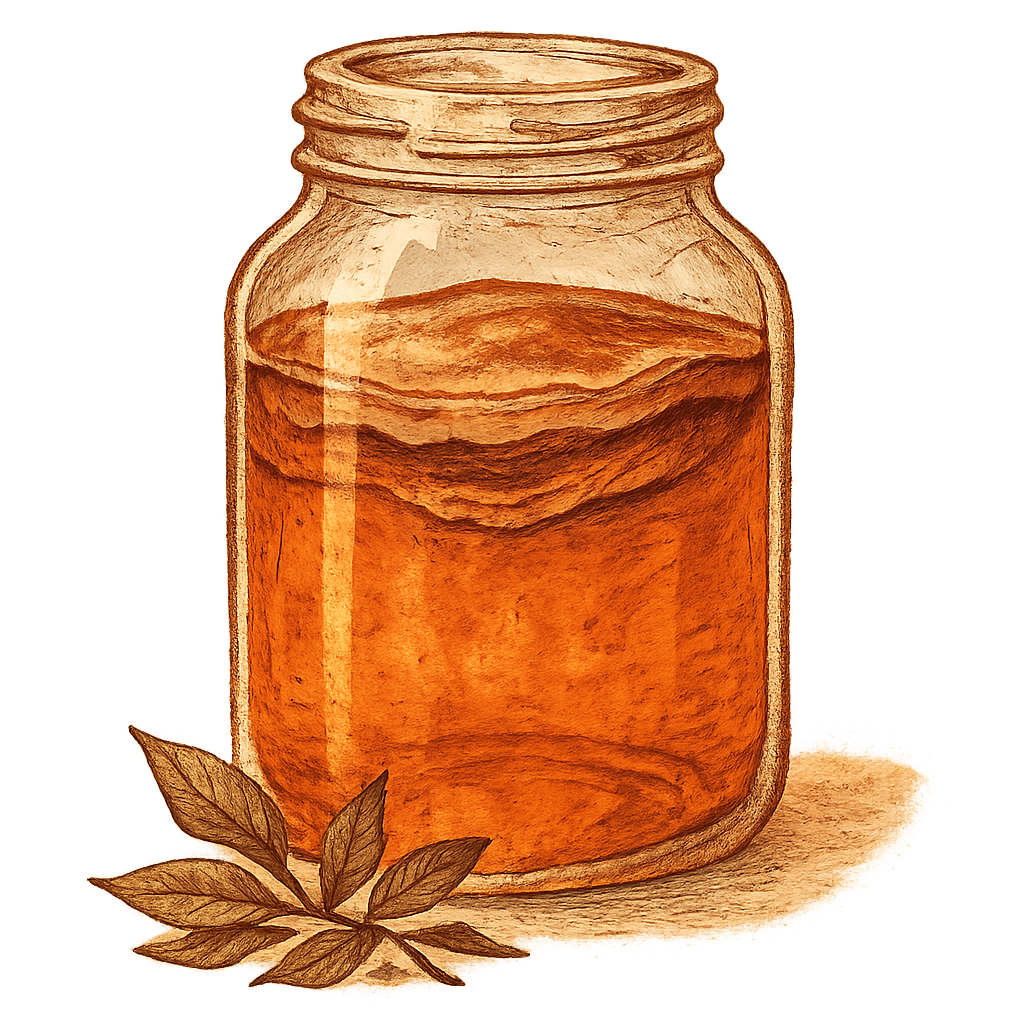
Kombucha is a naturally fermented tea made with a SCOBY (Symbiotic Culture of Bacteria and Yeast) that converts sweet tea into a tangy, effervescent probiotic drink over 7–14 days. The two-stage process — first fermentation to develop flavor and second fermentation in sealed bottles to build carbonation — gives you full control over sweetness, sourness, and fizz. With a healthy SCOBY, you can brew batch after batch indefinitely, customizing the flavor with fruit, ginger, herbs, and botanicals.
Equipment
- 1-gallon glass jar
- Breathable cover (tightly woven cloth or paper towel + rubber band)
- Flip-top or screw-cap glass bottles (for second fermentation)
- Funnel
- Fine mesh strainer
- pH strips or digital pH meter (optional but recommended)
- Long-handled spoon
- Rubber band (to mark liquid level)
Ingredients
- Black or green tea (loose leaf or bags)
- Granulated white sugar (plain white sugar works best)
- SCOBY with at least 1 cup starter liquid
- Filtered or dechlorinated water
- Fruit, juice, ginger, or herbs (for second fermentation)
Workflow
Brew Sweet Tea
1–2 hours (including cooling)Boil water
Bring 4 cups of filtered water to a full boil in a pot.
Steep tea
Add 4–6 tea bags (or 2 tablespoons loose tea) and steep for 10–15 minutes. Remove tea bags without squeezing.
Dissolve sugar
Stir in 1 cup of granulated white sugar until fully dissolved. Do not reduce the amount — the SCOBY feeds on it.
Cool the tea completely
Add the remaining cold water (about 8 cups) to bring the total to roughly 12 cups. Let cool to room temperature below 85°F (29°C) before proceeding.
Hot tea will kill your SCOBY. Always cool completely before adding the culture.
Ready When
Add SCOBY & First Fermentation (1F)
7–14 daysTransfer tea to jar
Pour cooled sweet tea into your clean gallon glass jar.
Add starter liquid
Pour in 1–2 cups of strong starter kombucha (from a previous batch or purchased with your SCOBY). Stir gently.
Add SCOBY
Gently place your SCOBY on top of the liquid. It may float, sink, or hover — all are fine. A new SCOBY will form at the surface regardless.
Cover and ferment
Cover with a breathable cloth secured with a rubber band. Place in a warm spot (75–85°F / 24–29°C) away from direct sunlight. Do not disturb.
Taste-test from day 7
After 7 days, use a clean straw to draw a small sample from below the SCOBY and taste. Continue fermenting until you reach your preferred balance of sweet and tart.
Ready When
Bottle & Second Fermentation (2F)
2–4 daysReserve SCOBY and starter
Remove the SCOBY and set aside with 1–2 cups of finished kombucha in a clean jar. This is your starter for the next batch.
Add flavorings to bottles
Add 1–2 tablespoons of fruit, juice, ginger, or other flavoring to each 16 oz bottle before filling.
Fill and seal bottles
Strain kombucha through a fine mesh strainer into bottles, leaving 1–2 inches of headspace. Seal tightly.
Always leave headspace — carbonation builds significant pressure in sealed bottles.
Ferment at room temperature
Store sealed bottles at room temperature for 2–4 days to build carbonation.
Burp bottles daily
Open each bottle briefly once a day to release excess pressure, then reseal. Check carbonation level by feel — bottles should feel firm but not rock-hard.
Over-carbonated bottles can explode or spray violently when opened. Always open bottles over a sink.
Reduce fruit/sugar or shorten F2 time if bottles get too hard.
Ready When
Refrigerate & Enjoy
Refrigerate to stop fermentation
Once carbonation reaches your desired level, move all bottles to the refrigerator. Cold dramatically slows fermentation and locks in carbonation.
Serve cold
Open bottles slowly and carefully. Pour over ice and enjoy. The SCOBY and starter are ready to begin the next batch immediately.
Even refrigerated kombucha can fizz over when opened — always open slowly over a sink.
Troubleshooting
Common issues and how to fix them. Something look off? Find your symptom below.
Food Safety
Hygiene
Monitor pH — finished first fermentation kombucha should be pH 2.5–3.5. If pH is above 4.0 after 7+ days at proper temperature, the SCOBY may be compromised.
Use at least 1–2 cups of strong starter liquid per gallon batch. This lowers pH quickly and protects against harmful contamination during early fermentation.
Equipment
Never ferment kombucha in ceramic, crystal, or lead-glazed vessels. Kombucha's acidity leaches lead and heavy metals from glazes. Use only glass or food-grade stainless steel.
Cover the jar with a tightly woven cloth or paper towel — not cheesecloth. Fruit flies can penetrate loose weaves and introduce mold contamination.
Use only glass flip-top bottles designed for carbonated beverages during second fermentation. Regular mason jar lids can crack under pressure.
Storage
Home-brewed kombucha contains 0.5–3% alcohol (ABV). Do not serve to pregnant people, children, or those avoiding alcohol without disclosure. Second fermentation can increase alcohol content.
Keep a SCOBY hotel — spare SCOBY layers in starter liquid in the refrigerator. This backup protects you if your active SCOBY becomes contaminated.
Temperature
Ferment at 70–80°F (21–27°C). Below 65°F fermentation is dangerously slow. Above 85°F yeast can overgrow, increasing alcohol content and creating off-flavors.
When to Discard
Fuzzy mold on the SCOBY (any color)
Green, black, blue, or white fuzzy mold on the SCOBY surface means the entire batch and SCOBY must be discarded. Do not confuse mold with the rough, bumpy texture of a new SCOBY forming (which is wet, not fuzzy) or with brown yeast strands hanging below the SCOBY.
Rotten, putrid, or nail polish (acetone) smell
Healthy kombucha smells vinegary, slightly sweet, and fizzy. An acetone or strongly solvent smell in first fermentation indicates serious yeast imbalance. A truly rotten or putrid smell means harmful contamination — discard everything and start fresh.
pH above 4.0 after 7+ days at proper temperature
If the brew has not acidified after a full week at 75–85°F, the SCOBY is likely unhealthy or the batch is compromised. The low pH of healthy kombucha is its primary protection against pathogens.
Storage Guidelines
Room Temperature
First fermentation: 7–14 days at 70–80°F. Second fermentation (sealed bottles): 2–4 days. Burp bottles daily.
Refrigerated
Refrigerate bottled kombucha after reaching desired carbonation. Fermentation slows dramatically. Consume within 1–3 months for best quality.
Shelf Life
Bottled kombucha: up to 3 months refrigerated. Flavor peaks at 1–4 weeks after bottling. SCOBY in a hotel jar lasts indefinitely with weekly feeding.
Flavor Variations
Once you have mastered the basics, try these flavor combinations to take your ferments to the next level.
Classic Ginger Lemon
The most popular kombucha flavor worldwide — zingy, refreshing, and deeply carbonated. Ginger feeds the yeast aggressively for a lively, satisfying fizz.
Ingredients
- 1–2 tsp freshly grated ginger per 16oz bottle
- 1 tbsp fresh lemon juice
- Optional: thin slice of lemon with peel
More ginger means more carbonation — check bottles after just 1.5 days in warm weather.
Whole grated ginger produces far more flavor complexity than ginger powder.
Mixed Berry Burst
A blend of blueberries, raspberries, and blackberries produces a deep purple, intensely fruity kombucha with a satisfying tartness and beautiful color.
Ingredients
- 2–3 tbsp mixed fresh or frozen berries per 16oz bottle
- Optional: 1 tsp fresh lemon juice
- Optional: small sprig of thyme for an herbal note
Frozen berries work especially well — their cells rupture during freezing, releasing juice and sugar faster.
Muddle fresh berries lightly before adding to the bottle.
Peach Ginger
Ripe summer peaches and fresh ginger are one of the most popular kombucha combinations — sweet, spicy, and highly carbonated with a gorgeous golden color.
Ingredients
- 3 tbsp fresh peach, diced or pureed
- 1 tsp freshly grated ginger
- Optional: 1 tsp raw honey
Use ripe, fragrant peaches — underripe fruit produces less flavor and slower carbonation.
Ginger dramatically increases carbonation speed; check bottles after 1.5 days in warm weather.
Hibiscus Rose
Dried hibiscus flowers produce a stunning crimson brew with a tart cranberry-like flavor, softened by a hint of rose petal — beautiful and dramatic.
Ingredients
- 1 tbsp dried hibiscus flowers per bottle
- 1 tsp dried culinary rose petals (food grade)
- Optional: 1 tsp raspberry juice to boost color
Hibiscus produces high tannins — avoid over-steeping or long F2 times to prevent astringency.
The crimson color is dramatic and completely natural.
Chai Spice
A warming blend of cinnamon, cardamom, clove, and black pepper transforms kombucha into a complex, aromatic drink reminiscent of masala chai tea.
Ingredients
- 1 cinnamon stick, broken into pieces
- 3 cardamom pods, lightly crushed
- 2 whole cloves
- 2–3 black peppercorns
- Optional: 1 star anise
Use whole spices rather than ground — ground spices cloud the brew and can over-extract quickly.
Steep the spices in a small amount of kombucha for 30 minutes before bottling for more even flavor distribution.
Strawberry Basil
Sweet strawberries and aromatic fresh basil create a sophisticated pairing with floral notes and a vibrant pink color that makes this a crowd favorite.
Ingredients
- 3 fresh strawberries, sliced
- 3–4 fresh basil leaves
- Optional: drizzle of raw honey
Basil can turn dark during F2 — this does not affect flavor but can look unappealing; strain before serving.
Strawberries produce excellent carbonation due to their high natural sugar content.
Track Your Kombucha with FermentBuddy
Get smart timers, guided workflows, and real-time troubleshooting for your kombucha and all your fermentation projects.