How to Make Tempeh
Grow tempeh at home by fermenting soybeans with Rhizopus mold. A nutty, high-protein plant-based food with a firm, sliceable texture.
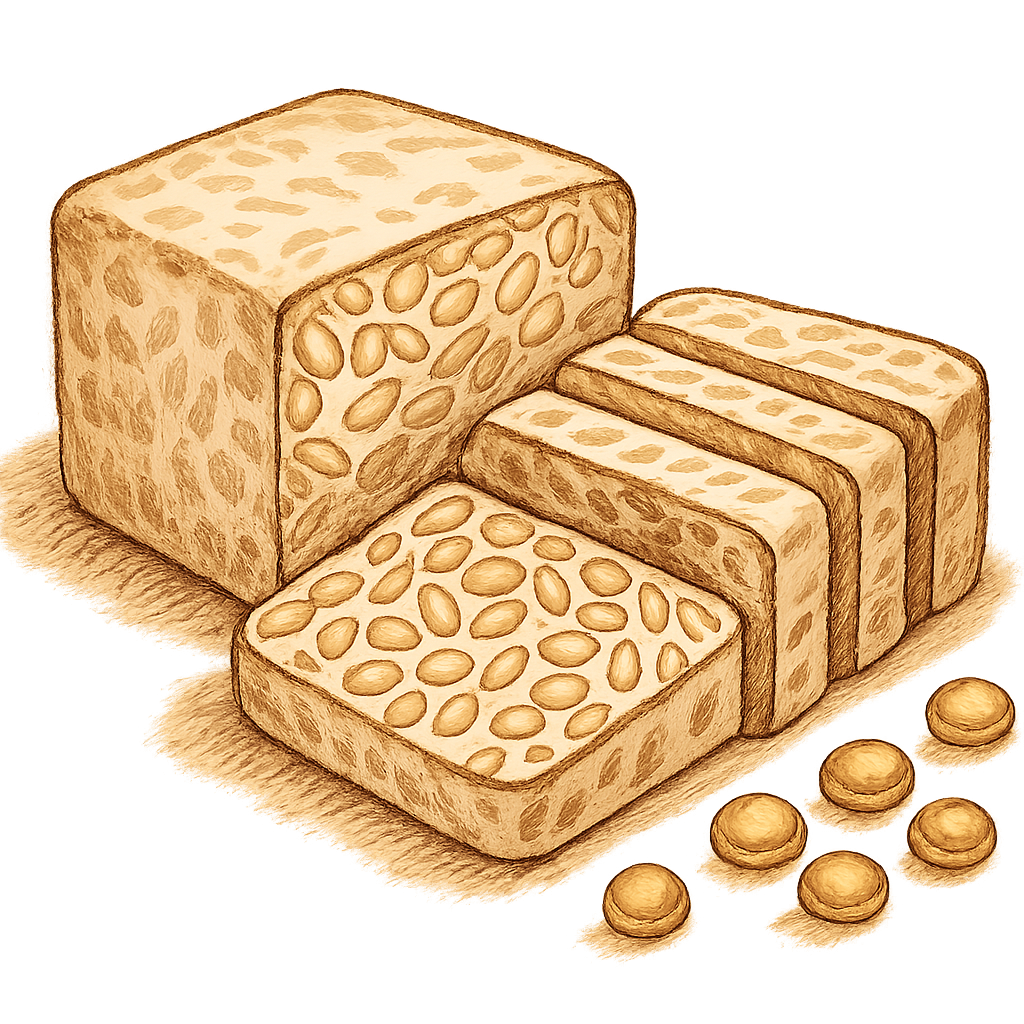
Tempeh is a traditional Indonesian fermented food made by binding soybeans (or other legumes and grains) with Rhizopus oligosporus mold into a firm, protein-rich cake. The Rhizopus mycelium weaves through the beans, producing a nutty, earthy, mushroom-like flavor and making the proteins far more digestible than plain cooked soybeans. Unlike many ferments, tempeh requires precise temperature control — 85–90°F — and produces results in just 36–48 hours. It must always be cooked before eating.
Equipment
- Large pot (4+ quart)
- Large bowl for soaking
- Colander or strainer
- Clean towels or paper towels
- Mixing bowl
- Quart-sized zip-lock bags
- Needle or pin (to perforate bags)
- Probe thermometer
- Incubation chamber (oven with light on, cooler with heat mat, or dehydrator)
- Baking sheet or wire rack
Ingredients
- Dried soybeans (2 cups / 400g)
- Tempeh starter — Rhizopus oligosporus (1 tsp / ~2g)
- White vinegar or apple cider vinegar (2 tablespoons)
- Water (for soaking and cooking)
Workflow
Soak the Soybeans
8–24 hoursRinse and soak
Rinse 2 cups dry soybeans, place in a large bowl, and cover with water by at least 3 inches. The beans will roughly double in size.
Ready When
Dehull & Split the Beans
20–40 minutesSqueeze and rub beans
Drain the soak water. In batches, squeeze and rub beans vigorously between your palms to split and loosen the hulls.
Float off the hulls
Fill the bowl with water, agitate the beans, then skim and pour off the floating hulls. Repeat 4–6 times until most hulls are removed.
Ready When
Cook & Dry Thoroughly
45–60 minutesCook beans with vinegar
Place dehulled beans in the pot, cover with fresh water, and add 2 tbsp vinegar. Bring to a boil, then simmer for 30 minutes. Beans should be tender but not mushy — al dente.
Do not overcook — mushy beans create a wet environment that favors bacteria over mold.
Do not skip the vinegar — it lowers pH to favor Rhizopus during the critical early incubation.
Drain and dry thoroughly
Drain well, spread beans on clean towels, pat dry, and air-dry 15–30 minutes until surface moisture has fully evaporated. This step is critical — excess moisture encourages bacteria instead of mold.
Cool to below 95°F
Let beans cool to below 95°F (35°C) before inoculating. Verify with a thermometer.
Temperatures above 115°F (46°C) will kill the starter spores entirely.
Ready When
Inoculate & Pack
10–15 minutesSprinkle starter evenly
Place the dry beans in a clean bowl. Sprinkle 1 tsp of tempeh starter over the beans. For even distribution, tap it through a small fine-mesh strainer while tossing the beans.
Mix thoroughly
Toss and mix with clean hands for 1–2 minutes until every bean surface has contact with spores.
Pack into perforated bags
Fill zip-lock bags and press flat into slabs 1–1.5 inches thick. Squeeze out air and seal. Perforate the entire surface with a needle — holes approximately every 1 cm (0.5 inch) on both sides.
Ready When
Incubation
24–48 hoursSet up incubation chamber
Target temperature: 85–90°F (29–32°C). Options: oven with only the light on (check temp first), cooler with a seedling heat mat, or a dehydrator set to 88°F. Place a thermometer at bag level.
Place bags on a rack
Lay bags flat on a wire rack so air circulates on all sides. Do not stack bags on top of each other.
Monitor temperature closely
Check every 4–6 hours for the first 18 hours. After 18–24 hours, the mold generates its own metabolic heat — internal temps may rise to 100–104°F. If it exceeds 104°F, open the chamber to ventilate immediately.
Temperature above 110°F (43°C) will kill the mold — overheating is the number one failure cause.
Temperature below 75°F (24°C) gives bacteria a competitive advantage over the Rhizopus.
Harvest at 36–48 hours
When the entire surface is covered in dense white mycelium and the cake holds together as a solid slab, the tempeh is done. Some gray sporulation on a fully white cake is normal at 48+ hours.
Ready When
Storage
Refrigerate or freeze promptly
Refrigerate immediately after incubation and use within 5–7 days. For longer storage, slice into portions, wrap tightly, and freeze for 3–6 months.
Do not leave finished tempeh at room temperature — the mold will continue to grow, over-mature, and become slimy.
Troubleshooting
Common issues and how to fix them. Something look off? Find your symptom below.
Food Safety
Temperature
Maintain 85–90°F (29–32°C) throughout the entire incubation period. Temperature control is the most critical safety factor in tempeh.
Always cook tempeh before eating — steam, fry, bake, or boil. Cooking destroys surface bacteria and improves digestibility.
Hygiene
Only use food-grade Rhizopus oligosporus starter from a reputable supplier. Never attempt to cultivate wild mold or substitute other mold species.
Discard any batch with green, blue, yellow, pink, or orange mold immediately. These colors indicate contaminating mold species that may produce mycotoxins.
Acidify beans before inoculation by tossing with 1–2 tsp white vinegar per pound. The pH drop discourages contaminating bacteria during early incubation.
Remove as many soybean hulls as possible before inoculating. Hulls trap moisture that encourages bacterial contamination.
Dry the cooked beans thoroughly before adding starter spores. Excess surface moisture is the primary cause of bacterial contamination.
Equipment
Poke ventilation holes every 2–3 cm in the fermentation bag. Rhizopus is aerobic and needs oxygen; proper gas exchange prevents heat buildup.
Storage
Refrigerate finished tempeh immediately. The mold continues to grow slowly at room temperature and will over-mature.
When to Discard
Green, blue, yellow, pink, or orange mold
Any of these colors indicate contamination by Aspergillus, Penicillium, or other unwanted species that may produce mycotoxins. Discard the entire batch — there is no safe way to salvage contaminated tempeh.
Strong ammonia or putrid smell
Healthy tempeh smells earthy, nutty, and mushroom-like. An ammonia smell indicates bacterial overgrowth that has broken down proteins into unsafe compounds. Tempeh with a strong ammonia smell is not safe even after cooking.
Wet, slimy, or falling-apart texture
Good tempeh is a firm, solid cake bound by white mycelium. A wet, slimy, or loose structure indicates bacterial contamination from excess moisture or poor preparation. Discard immediately.
No growth at all after 36 hours at proper temperature
If no white mycelium has appeared after 36 hours at 85–90°F, the batch will not succeed. The starter was likely dead, the beans were too moist, or the temperature was off. Discard and start over.
Storage Guidelines
Room Temperature
Incubation only: 36–48 hours at 85–90°F (29–32°C). Do not store finished tempeh at room temperature — the mold continues to grow and will over-mature.
Refrigerated
Refrigerate immediately after incubation. Keeps for 5–7 days wrapped tightly. The mold continues to grow slowly in the fridge — some darkening over time is normal.
Frozen
Slice before freezing for convenience. Wrap portions tightly in plastic wrap then place in a freezer bag. Freeze for up to 3–6 months. Cook from frozen or thaw in the refrigerator.
Shelf Life
Refrigerated: 5–7 days. Frozen: 3–6 months.
Flavor Variations
Once you have mastered the basics, try these flavor combinations to take your ferments to the next level.
Traditional Soybean
The classic benchmark — firm, slightly nutty, with a mild earthy aroma from the mycelium. The flavor most people associate with tempeh, excellent for everything from stir-fries to sandwiches.
Ingredients
- 500g whole soybeans
- 2 tbsp white or rice vinegar (for soak and cook water)
- 1 tsp tempeh starter (Rhizopus oligosporus)
Soak beans for 12–18 hours and dehull by rubbing between palms and skimming floating hulls.
Dry beans very thoroughly before inoculating — excess moisture is the enemy.
Black Bean Tempeh
Black beans produce a visually striking dark tempeh with a slightly earthier, more robust flavor than soybean tempeh — excellent for tacos, grain bowls, and bold dishes.
Ingredients
- 500g black beans
- 2 tbsp white vinegar
- 1 tsp tempeh starter
Black beans are harder to dehull than soybeans — soaking for 18 hours helps loosen the skins.
Fermentation may take slightly longer (36–48 hours) due to the beans' denser structure.
Chickpea Tempeh
A nutty, slightly sweet tempeh with a firmer bite — excellent for grain bowls and a great soy-free alternative. Absorbs marinades exceptionally well.
Ingredients
- 500g dried chickpeas
- 2 tbsp apple cider vinegar
- 1 tsp tempeh starter
Chickpea skins are tough — remove as many as possible for a dense, cohesive block.
Works best as crumbles or diced pieces in savory applications.
Soybean & Brown Rice Blend
A 70/30 blend of soybeans and cooked brown rice adds a subtle nuttiness and slightly lighter texture to classic tempeh — popular in Southeast Asian home kitchens.
Ingredients
- 350g soybeans, cooked and dehulled
- 150g brown rice, cooked and cooled
- 1 tsp tempeh starter
- 1 tbsp white vinegar
Ensure both components are completely dry before mixing and inoculating.
The rice should be fully cooked but not mushy — slightly al dente for better binding with mycelium.
Mixed Grain Medley
A multi-grain tempeh using barley, farro, and sunflower seeds — hearty, chewy, high-fiber, and with a complex nutty flavor profile that holds up beautifully to marinating.
Ingredients
- 200g whole barley, cooked
- 200g farro, cooked
- 100g raw sunflower seeds
- 1 tbsp white vinegar
- 1 tsp tempeh starter
All grains must be thoroughly cooked but not mushy — drain and air-dry completely before mixing.
Sunflower seeds add a pleasant crunch and healthy fat content.
Lentil & Sunflower Seed
A high-protein, soy-free tempeh using whole green lentils and sunflower seeds — faster to prepare with a milder, nuttier flavor profile. Great for those avoiding soy.
Ingredients
- 350g whole green lentils, cooked firm (not mushy)
- 150g raw sunflower seeds
- 1 tbsp apple cider vinegar
- 1 tsp tempeh starter
Cook lentils to just done — mushy lentils will not bind into a firm block.
This tempeh tends to crumble more than soybean tempeh — use in scrambles or tacos rather than sliced steaks.
Track Your Tempeh with FermentBuddy
Get smart timers, guided workflows, and real-time troubleshooting for your tempeh and all your fermentation projects.