How to Make Fermented Pickles
Make crunchy, probiotic lacto-fermented pickles in a salt brine. No vinegar needed for these naturally tangy, gut-healthy dill pickles.
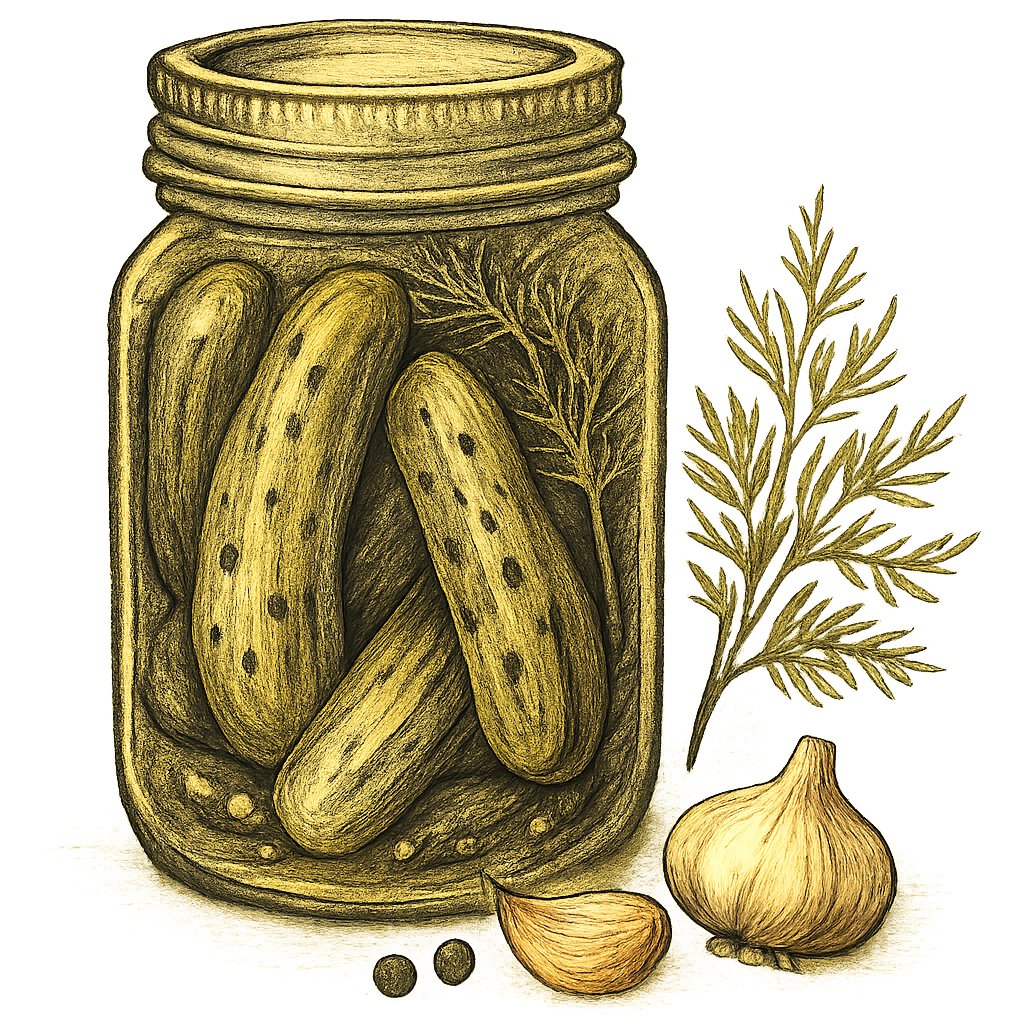
Lacto-fermented pickles are naturally preserved cucumbers brined in salt water — no vinegar required. Wild Lactobacillus bacteria consume sugars and produce lactic acid, creating crunchy, tangy, probiotic-rich pickles with far more flavor complexity than store-bought vinegar pickles. The process takes as little as 3 days for half-sour pickles or up to 4 weeks for fully soured, deli-style results. All you need is salt, water, cucumbers, and patience.
Equipment
- Wide-mouth Mason jar (1 quart / 1L)
- Fermentation weight (glass disc, ceramic weight, or brine-filled zip-lock bag)
- Fermentation lid with airlock, or regular lid used loosely
- Kitchen scale (gram-accurate)
- Cutting board and sharp knife
- Small plate or tray (for overflow)
Ingredients
- Pickling cucumbers — Kirby variety (1–1.25 lbs / 450–560g)
- Non-iodized sea salt or kosher salt (28g / approximately 2 tablespoons)
- Filtered, non-chlorinated water (3 cups / 710ml)
- Fresh dill (2–3 sprigs or 1 dill head)
- Garlic (3–5 cloves, peeled and lightly crushed)
- Black peppercorns (1 teaspoon)
- Mustard seeds (1 teaspoon)
- Grape leaf, oak leaf, or horseradish leaf (optional — provides tannins for extra crunch)
Workflow
Prepare Brine & Cucumbers
15–30 minutesMake 3.5% salt brine
Weigh 28g of non-iodized salt and dissolve it completely in 3 cups (710ml) of filtered water. Stir until no salt crystals remain. This ratio creates an environment where beneficial Lactobacillus bacteria thrive while harmful bacteria cannot.
Do NOT use iodized salt — iodine kills fermentation bacteria
Do NOT use chlorinated tap water — chlorine inhibits Lactobacillus
Wash and trim cucumbers
Rinse cucumbers under cold water, gently scrubbing off any dirt. Trim off the blossom end (the end opposite the stem) — it contains pectinase enzymes that cause softening during fermentation. If unsure which end is which, trim both ends to be safe.
Prepare aromatics
Peel and lightly crush garlic cloves. Rinse dill sprigs. Measure out peppercorns, mustard seeds, and any tannin leaves. Having everything ready before packing keeps the process efficient.
Ready When
Pack the Jar
10 minutesLayer aromatics in the bottom
Place half the dill, crushed garlic, peppercorns, mustard seeds, and optional tannin leaf on the bottom of the jar. This distributes aromatics throughout the jar as cucumbers are added on top.
Pack cucumbers tightly
Arrange cucumbers vertically, packed as tightly as possible without crushing them. Tight packing prevents cucumbers from floating up above the brine — floating increases mold risk. Leave 1–1.5 inches of headspace at the top. Tuck the remaining dill and garlic around and on top of the cucumbers.
Every cucumber must be submerged — exposed surfaces will grow mold
Pour brine and add weight
Slowly pour the prepared brine over the cucumbers until all pieces are fully submerged with at least half an inch of brine above the top cucumber. Place your fermentation weight on top to keep everything pressed below the brine line. Seal with an airlock lid or place a regular lid loosely on top.
Check brine level daily — top off with fresh 3.5% brine if the level drops below the cucumbers
Ready When
Active Fermentation
3–14 daysPlace at the right temperature
Set the jar on a small plate or tray (for overflow) at 65–75°F (18–24°C), away from direct sunlight. Temperature directly controls both speed and texture: cooler temperatures produce slower, crunchier pickles; warmer temperatures produce faster results with softer texture.
Check daily
Every day, burp the jar if not using an airlock by briefly loosening the lid to release CO2. Check that all cucumbers remain below the brine. Top off with fresh 3.5% brine if the level drops. Look for signs of activity: cloudiness in the brine is excellent — it means Lactobacillus is active.
Taste starting at day 3 (half-sour)
Use a clean fork to lift a cucumber and taste. At day 3, good half-sour pickles are mildly tangy, still crunchy, and retain some fresh cucumber flavor. If this is the texture and sourness you want, move the jar to the refrigerator now.
Continue for full-sour
For full-sour deli-style pickles, continue fermenting at room temperature for 7–14 days (or up to 4 weeks). The pickles will become progressively more sour and turn olive-green all the way through. Taste every few days and refrigerate when the sourness level suits you.
Ready When
Cold Storage
Refrigerate to lock in flavor
Transfer the entire jar to the refrigerator. Keep cucumbers submerged in their brine — the probiotic-rich brine continues to be the best storage medium. Cold temperatures slow fermentation to nearly a stop, preserving the sourness level you achieved.
Slimy surfaces on pickles indicate contamination — discard the entire batch
Troubleshooting
Common issues and how to fix them. Something look off? Find your symptom below.
Food Safety
Hygiene
Keep all vegetables fully submerged in brine at all times. Any vegetable above the brine line can develop mold.
Use correct salt concentration: 2–4% by weight (20–40g salt per liter of water). Too little allows harmful bacteria; too much inhibits Lactobacillus.
Never use iodized salt or chlorinated tap water — both inhibit the Lactobacillus bacteria needed for safe fermentation.
Always remove the blossom end of cucumbers before fermenting. This end contains pectinase enzyme that accelerates softening.
Equipment
Use a fermentation weight to keep cucumbers submerged. A zip-lock bag filled with brine or a small glass disc works well.
Use only glass, ceramic, or food-grade plastic containers. Never use reactive metals like aluminum or copper.
Temperature
Ferment at 65–75°F (18–24°C). Higher temperatures cause mushy pickles; temperatures below 60°F significantly slow fermentation.
Storage
High sodium content: one large pickle spear contains 250–500mg of sodium. Individuals monitoring sodium intake should be aware.
When to Discard
Fuzzy mold growth (any color)
Any fuzzy, raised mold — white, green, black, blue, pink, or orange — means the batch is contaminated. Do not skim and continue. Discard the entire batch, sanitize the jar, and start fresh.
Slimy vegetables with putrid smell
Overly soft or slimy pickles paired with a putrid or rotten smell (not just sour or tangy) indicate contamination by harmful bacteria. Discard immediately.
Pink or orange streaks in the brine or vegetables
Pink or orange coloration can indicate Serratia marcescens or other harmful bacterial contamination. Discard immediately and start over with a clean jar.
Storage Guidelines
Room Temperature
Active fermentation: 3–14 days at 65–75°F (18–24°C). Taste starting at day 3 and refrigerate when desired sourness is reached.
Refrigerated
Refrigerate when pickles reach your preferred sourness level. Fermentation slows to nearly a stop. Keeps for 6–12 months. Flavor and crunch gradually decline over time.
Frozen
Not recommended — texture becomes very soft after thawing.
Shelf Life
Refrigerated: 6–12 months. Best crunch and flavor in the first 3 months.
Flavor Variations
Once you have mastered the basics, try these flavor combinations to take your ferments to the next level.
Classic Half-Sour Deli Pickle
The New York deli standard — bright green, crunchy, garlicky, and only mildly sour. Ready in just 2–4 days at room temperature and best eaten within 2 weeks at peak crunch.
Ingredients
- 8–10 small pickling cucumbers
- 2% brine (20g salt per liter of water)
- 4 cloves garlic, sliced
- Large handful fresh dill (stems and fronds)
- 1 tsp black peppercorns
- 1 tsp coriander seeds
- Optional: 1–2 grape leaves for crunch
Trim a thin slice off the blossom end of each cucumber before packing.
Half-sours are best after 2–4 days and should be refrigerated promptly to preserve crunch.
Full-Sour Garlic Dill
The fully soured version — deeply tangy, slightly softened, and packed with garlic and dill character. Fermented 2–4 weeks for maximum acidity and deli-style complexity.
Ingredients
- 8–10 pickling cucumbers
- 3% brine (30g salt per liter of water)
- 8 cloves garlic, lightly smashed
- Generous amount of fresh dill
- 1 tbsp black peppercorns
- 2 dried bay leaves
- Horseradish root slices for crunch
Ferment at a slightly cooler temperature (60–65°F) for better crunch in a long ferment.
These pickles continue to slowly sour in the refrigerator — flavor improves over months.
Spicy Dill
Classic garlic dill with added heat from fresh jalapeños and dried chili — all the satisfying crunch with a kick that builds with each pickle.
Ingredients
- 8–10 pickling cucumbers
- 2.5% brine
- 4 cloves garlic
- Large handful fresh dill
- 2 jalapeños, sliced into rings
- 1 dried habanero or cayenne pepper
- 1 tsp red pepper flakes
Layer jalapeño slices throughout the jar for even heat distribution.
Heat level mellows somewhat during fermentation — use slightly more chili than you think you need.
Middle Eastern Pink Turnip
The signature hot-pink pickles of Levantine cuisine — white turnip fermented with sliced beet for stunning color. An essential condiment on shawarma, falafel, and kebabs.
Ingredients
- 4 medium white turnips, cut into sticks or wedges
- 1 small beet, thinly sliced (for color)
- 2% brine
- 3 cloves garlic
- 1 tsp chili flakes (optional)
The beet turns the entire brine a stunning magenta — this is traditional and expected.
Ready in 5–7 days; color deepens the longer they ferment.
German Mixed Vegetable Pickle
A hearty, herb-forward mixed vegetable ferment with cauliflower, carrots, and green beans in a caraway-scented brine — versatile and great alongside grilled meats.
Ingredients
- 200g cauliflower florets
- 2 medium carrots, cut into sticks
- 100g green beans, trimmed
- 2% brine
- 1 tbsp caraway seeds
- 4 cloves garlic
- 2 tsp black peppercorns
- 2 dried bay leaves
Cut all vegetables to similar sizes for even fermentation speed.
Cauliflower absorbs brine flavor most readily and becomes the standout element.
Track Your Fermented Pickles with FermentBuddy
Get smart timers, guided workflows, and real-time troubleshooting for your fermented pickles and all your fermentation projects.