How to Make Vinegar
Make artisan vinegar at home from fruit scraps, wine, or cider. A slow two-stage fermentation that produces complex, flavorful vinegars.
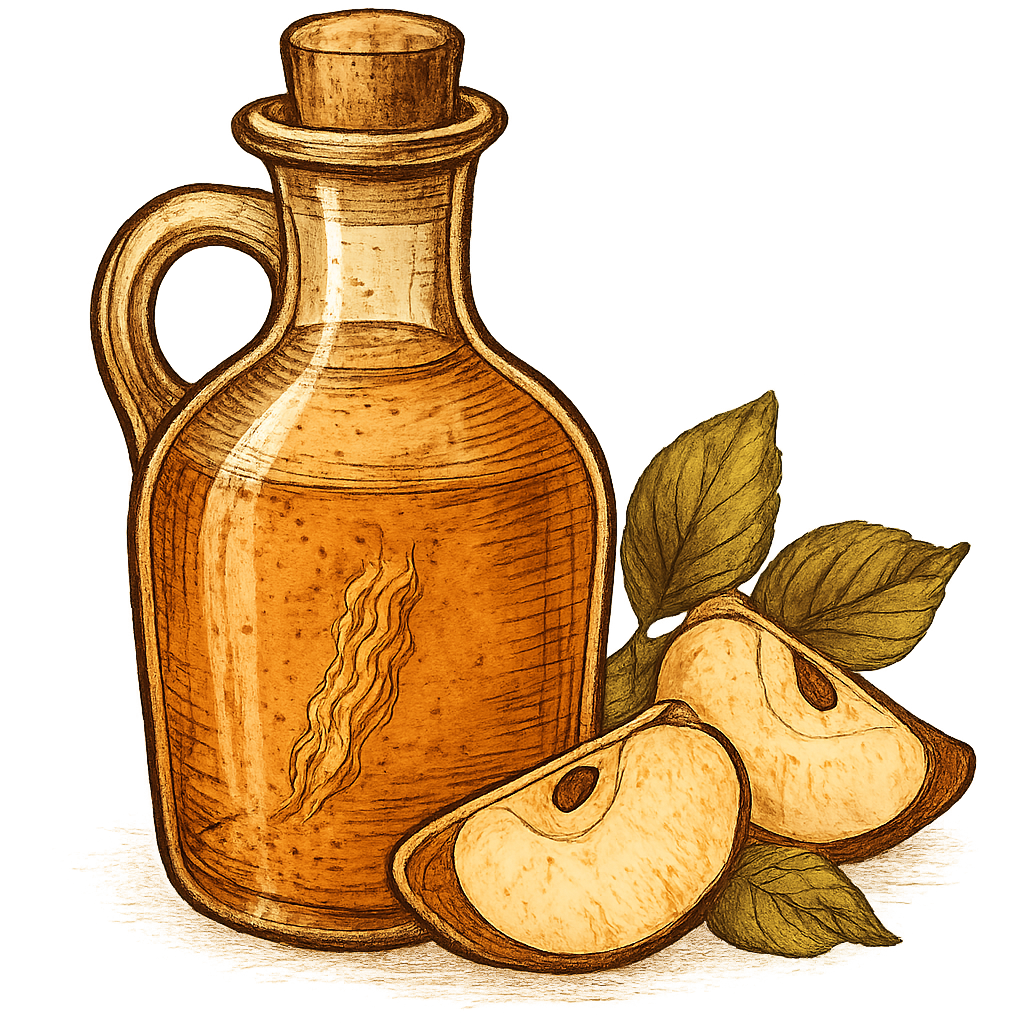
Homemade apple cider vinegar (and other fruit vinegars) is a two-stage fermentation: first, wild yeasts convert the sugars in fruit or juice to alcohol; then, Acetobacter bacteria convert that alcohol to acetic acid — the compound that gives vinegar its characteristic tang. The process takes 3–6 weeks total but requires minimal active effort. A "mother of vinegar" — a gelatinous biofilm of Acetobacter — forms on the surface and can be saved to start future batches, making this a truly self-sustaining ferment.
Equipment
- Wide-mouth glass jar (1 quart / 1L or larger)
- Breathable cover (cheesecloth, coffee filter, or cloth)
- Rubber band
- Wooden or plastic spoon (no reactive metals)
- Cutting board and knife
- Fine-mesh strainer or cheesecloth for straining
- Glass bottles with plastic or silicone-lined caps for storage
- pH strips or digital pH meter (optional but recommended)
Ingredients
- Apple scraps or whole apples (2–3 medium apples worth of material)
- Filtered water (2 cups / 500ml, non-chlorinated)
- Sugar (2 tablespoons — feeds initial yeast fermentation)
- Raw unpasteurized apple cider vinegar with mother (2 tbsp — optional starter to introduce Acetobacter)
Workflow
Preparation & Setup
15–30 minutesPrepare the apples
Wash and chop apples into approximately 1-inch pieces — cores, seeds, and peels are all included and valuable. Fill the jar about 3/4 full.
Dissolve sugar in water
Stir 2 tbsp sugar into 2 cups of room-temperature filtered water until fully dissolved. Pour over the apple pieces until they are fully submerged, leaving 1 inch of headspace.
Add starter (optional but recommended)
Add 2 tbsp of raw unpasteurized ACV (such as Bragg's) to give beneficial Acetobacter bacteria a head start for the acetic acid stage.
Cover and place
Cover with breathable cloth, secure with a rubber band. Place in a warm (70–80°F / 21–27°C), dark spot away from direct sunlight.
Never use an airtight container during the alcoholic fermentation stage — CO2 must escape.
Do not use metal utensils or metal-capped bottles — acetic acid corrodes metal and introduces harmful compounds.
Ready When
Alcoholic Fermentation
7–14 daysStir daily
Once per day, stir vigorously for 15–30 seconds. This introduces oxygen (which inhibits surface mold), redistributes wild yeast activity, and pushes any floating apple pieces below the liquid surface.
Do not skip daily stirring — it is your primary defense against surface mold during this stage.
Check for mold each day
A thin white film (Kahm yeast) on the surface is harmless — stir it in. Fuzzy colored mold means contamination — skim it off if minor; discard the batch if widespread.
Taste at day 7
The liquid should taste noticeably alcoholic with little residual sweetness — like a dry hard cider. If still sweet, continue for a few more days.
Strain out the apple solids
Once the liquid tastes dry and alcoholic, strain all apple solids through a fine-mesh strainer into a clean jar. Press the solids gently to extract all liquid. Return only the strained liquid to a clean covered jar.
Ready When
Acetic Acid Fermentation
2–4 weeksDo NOT stir during this stage
Opposite of the previous stage: Acetobacter bacteria form a gelatinous biofilm on the surface (the mother of vinegar). Stirring disrupts this biofilm and significantly slows the conversion process. Leave completely undisturbed.
Watch for the mother to form
Within 5–10 days, a thin, translucent, gelatinous or slightly ropy film forms at the liquid surface where air meets liquid. This is the mother of vinegar — the visible sign that acetic fermentation is actively working.
Begin tasting at day 14
Gently tilt the jar and taste from below the mother without disturbing it. The vinegar is ready when it tastes sharply acidic with no remaining alcohol flavor.
Check pH (recommended)
Finished apple cider vinegar should have a pH between 2.5 and 3.5. A reading of approximately 3.0 is typical for well-made homemade ACV.
Ready When
Filter, Bottle & Store
15 minutes activeSave the mother
Carefully lift the mother from the jar using clean hands or a spoon. Store it in a small glass jar covered with some finished vinegar. Use it to start future batches and dramatically speed up fermentation.
Strain and bottle
Pour the vinegar through a cheesecloth-lined strainer into clean glass bottles. Use plastic caps or silicone-lined caps — metal caps will corrode from the acidity.
Troubleshooting
Common issues and how to fix them. Something look off? Find your symptom below.
Food Safety
Hygiene
If using homemade vinegar for canning or long-term food preservation, test its acidity with a titration kit. It must reach at least 5% acetic acid to be safe for canning — commercial vinegar is standardized at 5%; home vinegar is variable.
Do not stir or disturb the vessel during acetic fermentation (stage 2). The mother of vinegar is a delicate biofilm that forms at the air-liquid interface and is easily disrupted.
Storage
Do not use vinegar of unknown acidity for shelf-stable pickles or canned goods. Vinegar below 5% acetic acid does not reliably prevent pathogen growth.
Store finished vinegar in dark glass bottles away from light. Light degrades the complex flavor compounds and can affect the living mother culture.
Equipment
Do not use aluminum, copper, or regular cast iron vessels or utensils for vinegar production. The acidity corrodes these metals and introduces harmful compounds into the vinegar.
Cover the fermentation vessel with a tight-weave breathable cloth, not a solid lid. Acetic fermentation requires oxygen — sealing the vessel stops the process. The cloth also keeps fruit flies out, which are the primary contamination vector.
Use only plastic or silicone-lined caps for storage bottles. Metal caps corrode in contact with acetic acid.
When to Discard
Fuzzy mold growth (not the mother)
The mother of vinegar is gelatinous, slightly cloudy, or ropy — not fuzzy. Fuzzy mold growing on the surface or inside the vessel indicates contamination. If limited to the surface, remove that section. If in the liquid, discard the entire batch.
Putrid or rotten smell beyond normal sharp acidity
Vinegar should smell sharply acidic with fruity, complex notes from the base ingredient. A putrid, garbage-like, or rotten smell beyond normal vinegar sharpness indicates harmful contamination. Discard the batch.
No acidification progress after 4+ weeks at proper temperature
If there is no increase in sourness or acetic acid aroma after a month with a proper setup, the Acetobacter colony may be insufficient or absent. Add generous raw unpasteurized vinegar as starter and reassess. If still no progress after another 2 weeks, start over.
Storage Guidelines
Room Temperature
Production requires room temperature storage (65–80°F / 18–27°C) with breathable cloth cover for 3–6 weeks total. Finished vinegar can be stored at room temperature in sealed glass indefinitely.
Refrigerated
Refrigeration is not required for finished vinegar. Room-temperature storage in sealed glass bottles is the standard method. Refrigeration may slow further evolution of flavor.
Frozen
Not applicable — vinegar does not benefit from freezing.
Shelf Life
Indefinite at room temperature in sealed glass. Quality slowly mellows over 2–3 years. Raw vinegar with mother has essentially unlimited shelf life.
Flavor Variations
Once you have mastered the basics, try these flavor combinations to take your ferments to the next level.
Raw Apple Cider Vinegar
The gold standard of craft vinegars — fresh apples fermented through both alcoholic and acetic stages produce a complex, fruity vinegar with live mother. The most beginner-friendly vinegar to make and the most versatile to use.
Ingredients
- Apple scraps from 2–3 medium apples (peels, cores, and flesh)
- 2 tbsp raw cane sugar
- 2 cups filtered water
- 2 tbsp raw unpasteurized ACV with mother (optional starter)
A mix of tart and sweet apple varieties produces the most complex flavor.
Save the mother from each batch as starter for the next to dramatically speed up the process.
Provençal Herb Vinegar
White wine vinegar infused with a classic herbes de Provence blend — thyme, rosemary, lavender, and tarragon create a Mediterranean kitchen staple for dressings, marinades, and finishing.
Ingredients
- 500ml good-quality white wine vinegar
- 3 sprigs fresh thyme
- 2 sprigs fresh rosemary
- 2 sprigs fresh tarragon
- 1 tsp dried lavender flowers
- 2 dried bay leaves
Use fresh herbs when possible — they produce a brighter, more vibrant infusion than dried.
Infuse for 2–4 weeks in a sealed jar at room temperature, tasting weekly. Strain when flavor is at your desired intensity.
Garlic Chili Vinegar
A bold, punchy infused vinegar with whole garlic cloves and dried chilies — essential in South Asian and Southeast Asian cooking, and excellent as a condiment for dumplings, noodles, and rice dishes.
Ingredients
- 500ml white or rice vinegar
- 6 cloves garlic, peeled
- 4–6 dried red chilies (Thai bird's eye for intense heat, dried Anaheim for mild)
- 1 tsp black peppercorns
Garlic may turn slightly blue-green in acidic conditions — this is a natural chemical reaction and completely safe.
Infuse at room temperature for 1–3 weeks, tasting regularly. Refrigerate after straining.
Mixed Berry Shrub Vinegar
A vibrant, deeply flavored drinking vinegar made from macerated fresh berries — excellent as a cocktail base (shrub), diluted with sparkling water, in salad dressings, or drizzled over cheese.
Ingredients
- 500g mixed berries (blueberry, raspberry, blackberry)
- 200g raw cane sugar
- 500ml apple cider vinegar with mother
Macerate berries with sugar overnight to draw out all their juices before adding vinegar.
This is a quick-method drinking vinegar — not a full fermentation project.
Pear & Cardamom Vinegar
Ripe pear juice fermented to vinegar and then infused with cardamom and vanilla — a sophisticated, gently spiced vinegar for autumn cooking, grain salads, and roasted root vegetables.
Ingredients
- 2 liters ripe pear juice (blend and strain very ripe pears)
- 1 cup ACV with mother as starter
- 5 cardamom pods, lightly crushed (added post-fermentation)
- 1 vanilla pod (added post-fermentation)
Very ripe, almost overripe pears produce the best, most flavorful vinegar.
Infuse the cardamom and vanilla in the finished vinegar for 2–4 weeks before straining.
Fig & Black Pepper Balsamic-Style
Dried figs and cracked black pepper slow-infused into aged red wine vinegar — a homemade approximation of a premium aged balsamic condiment at a fraction of the cost.
Ingredients
- 500ml red wine vinegar (aged if available)
- 8 dried figs, quartered
- 1 tsp freshly cracked black pepper
- 1 small cinnamon stick
Infuse for 4–6 weeks for maximum depth — the figs soften and release their natural sweetness.
Reduce the strained infused vinegar by 30% in a saucepan to create a thick, syrupy condiment.
Track Your Vinegar with FermentBuddy
Get smart timers, guided workflows, and real-time troubleshooting for your vinegar and all your fermentation projects.