How to Make Water Kefir
Brew fizzy, probiotic water kefir using water kefir grains and sugar water. A refreshing dairy-free fermented drink you can flavor endlessly.
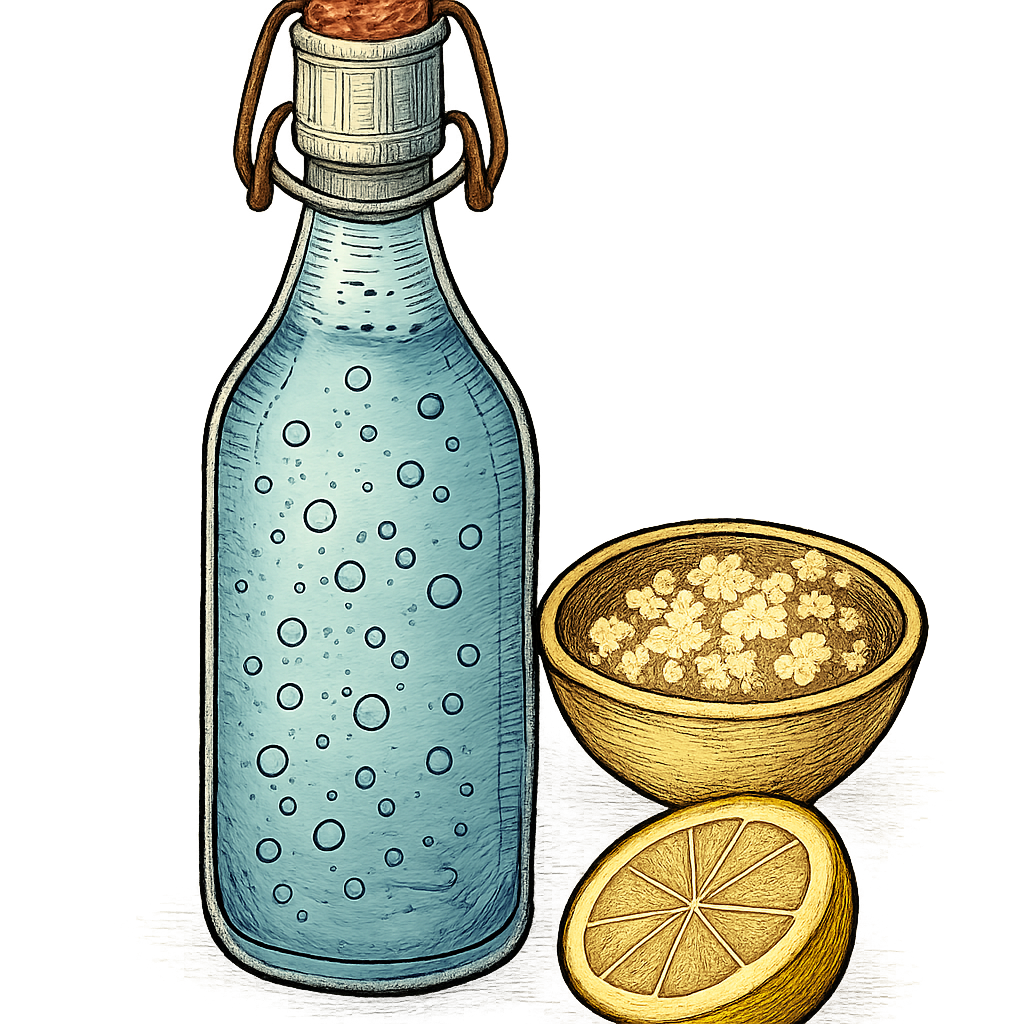
Water kefir is a light, fizzy, mildly tangy probiotic drink made by fermenting a sugar-water solution with water kefir grains — a symbiotic culture of bacteria and yeast held together in a gelatinous matrix. Unlike milk kefir, it is completely dairy-free and has a neutral base that makes it an excellent canvas for fruit, citrus, and herbal flavors. A first fermentation of 24–48 hours produces a lightly tart base; a sealed second fermentation adds carbonation and flavor in 1–3 additional days.
Equipment
- Glass jar (1 quart / 1L)
- Plastic or nylon mesh strainer (avoid prolonged metal contact)
- Breathable cover (cloth or coffee filter)
- Rubber band
- Flip-top (Grolsch-style) bottles for second fermentation
- Funnel
Ingredients
- Water kefir grains (2–4 tablespoons)
- Sugar (1/4 cup / 50g — plain white or raw cane)
- Filtered water (3–4 cups / 750ml–1L, non-chlorinated)
- Fruit, juice, or ginger for second fermentation flavoring (optional)
- Pinch of mineral-rich unrefined salt or mineral drops (optional but recommended)
Workflow
Prepare the Sugar Water
10 minutesDissolve the sugar
Dissolve 1/4 cup sugar in 1 cup of warm water, stirring until fully dissolved. Add the remaining 2–3 cups of cool filtered water to bring it to room temperature.
Ensure room temperature
The sugar water must be at room temperature (68–75°F / 20–24°C) before adding grains.
Hot water will kill water kefir grains — always verify temperature before adding grains.
Add minerals (optional)
Add a pinch of unrefined sea salt, a few drops of liquid mineral supplement, or a small piece of unsulphured dried fruit such as a date or fig. Water kefir grains require minerals to maintain their structure and health.
Ready When
First Fermentation (1F)
24–48 hoursAdd water kefir grains
Add 2–4 tablespoons of water kefir grains to the sugar water in the jar.
Cover and place
Cover with a breathable cloth secured with a rubber band. Place in a warm spot (68–78°F / 20–26°C) away from direct sunlight.
Ferment 24–48 hours
Leave undisturbed for 24–48 hours. The water will become slightly cloudy and noticeably less sweet as the grains consume the sugar.
Ready When
Strain the Grains
5 minutesStrain through a plastic strainer
Pour the water kefir through a plastic or nylon strainer into a clean jar or bowl. Collect the grains.
Start a new batch or store grains
Place grains directly into fresh sugar water for a new batch. For a break, store grains covered in fresh sugar water in the fridge, refreshing the sugar water every 1–2 weeks.
Second Fermentation (2F) — Optional
1–3 daysAdd flavorings to bottles
Add 1–2 tbsp of fruit, juice, or grated ginger per 16 oz bottle. Fruit juice and ginger create the best carbonation. Popular combinations: lemon-ginger, mixed berry, mango, grape.
Fill and seal bottles
Pour the strained first-ferment water kefir into flip-top bottles, leaving 1–2 inches of headspace. Seal tightly.
Ferment sealed for 1–3 days
Leave the sealed bottles at room temperature for 1–3 days to build carbonation from the residual sugars and fruit additions.
Burp bottles daily
Open each bottle briefly over a sink once per day to release excess pressure.
Water kefir can build significant pressure during 2F — burp bottles daily to prevent explosions.
Open bottles over a sink and point them away from your face.
Use only pressure-rated flip-top or commercial beverage bottles — regular mason jars can shatter.
Refrigerate when fizzy
Once carbonation reaches your desired level, move bottles to the refrigerator. Cold temperature halts fermentation and preserves the fizz.
Ready When
Troubleshooting
Common issues and how to fix them. Something look off? Find your symptom below.
Food Safety
Equipment
Use pressure-rated flip-top or commercial beverage bottles for second fermentation. Regular mason jars can crack or shatter under CO2 pressure.
Storage
Burp second-ferment bottles daily by opening briefly over a sink. Water kefir can build explosive pressure — especially with fruit juice and in warm weather.
Store resting grains in sugar water in the refrigerator, refreshing the water every 1–2 weeks. Never store grains dry or in plain water.
Hygiene
Water kefir contains 0.5–1% ABV after first fermentation and potentially 1–3%+ after a sealed second fermentation. Do not serve to children or pregnant individuals without disclosure.
Use filtered or spring water — chlorine and chloramine in tap water harm the grain culture over time.
Add mineral supplementation (sea salt, mineral drops, or dried fruit) to each batch. Grains without minerals gradually deteriorate and die.
Avoid honey in first fermentation — its antimicrobial properties inhibit the water kefir grain culture.
Discard any batch with fuzzy mold growth or a putrid smell. Healthy water kefir smells lightly sour, slightly sweet, and faintly yeasty.
When to Discard
Fuzzy mold growth in the jar
Any fuzzy mold requires discarding the batch. Rinse grains thoroughly with unchlorinated water. If grains appear slimy or discolored after rinsing, discard them too and source new grains.
Putrid or rotten smell (beyond normal sour and yeasty)
Healthy water kefir smells lightly sour, slightly sweet, and faintly yeasty — similar to a mild beer or light kombucha. A clearly putrid or rotten smell indicates harmful contamination. Discard the batch.
Grains have completely dissolved or turned to mush
If grains have fully dissolved and are not visible as distinct gelatinous crystals, the culture has died — likely from mineral starvation, chlorinated water, or honey exposure. Source new grains.
Storage Guidelines
Room Temperature
First fermentation: 24–48 hours at 68–78°F (20–26°C). Second fermentation (sealed bottles): 1–3 days at room temperature.
Refrigerated
Finished second-ferment water kefir keeps for 2–3 weeks refrigerated. Grains can be stored in sugar water in the fridge for 1–2 weeks between batches.
Shelf Life
Refrigerated finished kefir: 2–3 weeks. Grains are reusable indefinitely with proper mineral supplementation and regular feeding.
Flavor Variations
Once you have mastered the basics, try these flavor combinations to take your ferments to the next level.
Strawberry Lemonade
The most popular water kefir flavor — tart, sweet, and deeply pink. Fresh strawberries and lemon juice produce a drink that rivals any commercial soda for refreshment.
Ingredients
- 3–4 fresh strawberries, muddled or sliced
- 1 tbsp fresh lemon juice
- Optional: small drizzle of honey for extra carbonation
Muddle strawberries slightly before adding to release their juice and accelerate flavor extraction.
This flavor carbonates very quickly — check bottles at 18 hours in warm weather.
Black Cherry Vanilla
Tart black cherries and warm vanilla create a sophisticated water kefir with natural cola-like flavor notes — complex, refreshing, and probiotic.
Ingredients
- 3–4 pitted black cherries, fresh or frozen
- 1/2 tsp pure vanilla extract
- Optional: 1/2 cinnamon stick for extra warmth
Frozen cherries work excellently and are available year-round.
The cherry-vanilla combination creates a surprisingly convincing natural cola flavor.
Ginger Mint Sparkler
Fresh ginger and mint create a clean, zingy water kefir with a refreshing bite — tastes like a probiotic Moscow Mule without the alcohol.
Ingredients
- 1 tsp freshly grated ginger
- 5–6 fresh mint leaves, lightly bruised
- 1 tbsp fresh lime juice
Ginger dramatically increases carbonation — check bottles after 18–24 hours.
Use young (spring) ginger for a milder, more floral profile; mature ginger for more heat.
Raspberry Lime Rickey
Bright, effervescent, and deeply pink — this classic combination is tart, refreshing, and beautifully carbonated from the raspberry sugars.
Ingredients
- 1 tbsp fresh or frozen raspberries
- 1 tbsp fresh lime juice
- Zest of 1/4 lime
Raspberries have seeds — strain through a fine mesh sieve before drinking if you prefer a smooth drink.
Lime zest adds essential oils that create a fine foam on top when poured.
Elderflower Lemon
Delicate elderflower cordial combined with lemon produces a floral, refined water kefir with a light, sophisticated character.
Ingredients
- 1 tbsp elderflower cordial (store-bought or homemade)
- 1 tbsp fresh lemon juice
- Thin slice of lemon
Elderflower cordial already contains sugar which fuels excellent carbonation — reduce other sugar additions.
A delicate flavor best enjoyed on its own without food pairing.
Blood Orange Fizz
The intensely colored juice of blood oranges creates a stunning crimson water kefir with a complex bitter-sweet orange flavor that looks as impressive as it tastes.
Ingredients
- 3 tbsp fresh blood orange juice
- Optional: thin slice of blood orange with peel for visual appeal
- Optional: sprig of fresh rosemary for an herbal note
Blood orange season runs December–March. Use regular oranges or cara cara oranges outside of season.
The peel contributes complex flavor oils — remove after 12 hours to prevent bitterness.
Track Your Water Kefir with FermentBuddy
Get smart timers, guided workflows, and real-time troubleshooting for your water kefir and all your fermentation projects.